I have updated this paper with two additional sections: one on mind set and cognition and how this affects BMI within a firm and one on the design of new business models utilizing entrepreneurial strategies such as Discovery Driven Planning and Lean Start Up.
Author: Robert Sawhney
Beyond Strategy – the role of firm leadership
Leadership has been shown to be a crucial antecedent to the development of a market orientation and knowledge based firm. In fact, without committed and strong leadership in place, no firm can function effectively. This is particularly true for those firms which are attempting to move towards high performance since changes in behavior are predicated upon a clear direction and firm values.
What is leadership and how does it differ to management? There are numerous definitions of leadership. For example:
Leadership and learning are indispensable to each other.” John F. Kennedy
“Leadership is a combination of strategy and character. If you must be without one, be without the strategy.” Gen. H. Norman Schwarzkopf
“Leadership is a function of knowing yourself, having a vision that is well communicated, building trust among colleagues, and taking effective action to realize your own leadership potential.” Warren Bennis
“Leadership is influence – nothing more, nothing less.” John Maxwell, 1998
“Leadership is the art of influencing others to their maximum performance to accomplish any task, objective or project.” Cohen, W.A. ‘The Art of a Leader’ Englewood Cliffs,NJ: Prentice Hall (1990, p. 9)
“Leadership is the art of mobilizing others to want to struggle for shared aspirations.” Kouzes, J.M. & Posner, B.Z. ‘The Leadership Challenge’ San Francisco: Jossey-Bass (1995, p.30)
“Management is efficiency in climbing the ladder of success; leadership determines whether the ladder is leaning against the right wall.” Stephen R. Covey
“The only definition of a leader is someone who has followers.” The Drucker Foundation, 1996
“Leadership is the ability to step outside the culture to start evolutionary change processes that are more adaptive.” Schein (1992)
What one can see in these many definitions is a focus on influence, followers, trust, and change. Leadership is about motivating others in the firm to move in a cohesive direction. Whilst management is often associated with tasks such as planning and organizing, leadership (although strictly a management function) is often considered something separate and not only the domain of those in positions of hierarchical authority. When it comes to managing a group of independent knowledge workers, the ideas of vision, motivation and influence become increasingly important as traditional management authority does not apply in many circumstances and indeed, knowledge workers may often be resistant to what they perceive as undue authority being placed on their realm of work.
Practice What You Preach
In his book, Practice What You Preach, David Maister (ex Harvard professor and consultant to professional service firms) identified nine key statements that explained the variance in professional service firm performance that were the focus of study. Whilst his work was focused on professional service firms and published in 2003, the outcomes are even more relevant than ever to other industries as those industries become increasingly populated by knowledge workers.
- Client satisfaction is a top priority at our firm
- We have no room for those that put their personal agenda ahead of the interests of the client or the firm
- Those who contribute most to the overall success of the firm are rewarded the most highly
- Management gets the best work out of everybody
- Around here you are required, not just encouraged, to learn and develop new skills
- We invest a significant amount of time in things that will pay off in the future
- People within our firm always treat others with respect
- The quality of supervision on client projects is always uniformly high
- The quality of the professionals in our office is as high as can be expected
What Maister went to lengths to explain was that these statements were not rhetoric. They were defining values and actions within the firm which senior firm members believed and adhered to themselves. Leaders not only espoused these values, they were their values in use and as such they filtered through the entire firm. This is one of the key functions of a leader. They are responsible for setting the tone and climate of the firm. Such a climate and culture is not achieved through superficial statements (such as mission statements) that no one believes in, good leaders live and breathe the values of the firm.
A somewhat cursory reminder of the disconnect in leadership espoused values and values in use can be seen in past scandals involving Big 4 accounting firms and the collapse of prominent firms such as Lehman Brothers and Akai.
If we take a close look at the nine statements, we can see how they link into the key drivers of firm performance: market orientation and knowledge. For example, client satisfaction is a fluid and subjective notion. In many instances, technical excellence is a given and customer satisfaction will hinge upon expectations and issues related to service quality. Prior to, and during any engagement, firms must have the appropriate knowledge of client needs in relation to the current project and external factors such as what competitors may have offered to the client. This type of knowledge and expectation management requires all those involved in the engagement to be explicitly aware of issues that arise and ensure that the necessary information is on hand to be responsive to customer demands. This type of information generation and sharing is the hallmark of a market orientation and requires excellent leadership to ensure everyone understands the need for this approach and their role in achieving customer satisfaction. Such awareness is built through firm wide leadership and leadership that occurs at the group/engagement level. It is not simply the domain of senior leaders.
Let’s take an additional example from the nine statements:
No. 6 – we invest a significant amount of time in things that will pay off in the future.
This is an interesting one because many organizations are known for their short term orientation and lack of planning. However, this is especially crucial given the focus on responsiveness demanded by most customers. Responsiveness not only relates to an employee returning an email with 24 hours, it is a much more complex issue than most firms grasp. Responsiveness is also a firm wide issue that revolves around the firm’s ability to become agile given changes in the business environment. The ability of the firm to collect and absorb knowledge has a significant impact on responsiveness. For instance, if a customer seeks information that will affect the project and value proposition you are working on and the firm has no systems in place to either collect or share this type of information, responsiveness at the individual level will be materially affected because the person serving the customer will not be able to provide the information requested. Not only that, the fact that the firm may have been unaware of such information which pertained to a customer project (or may do in the future) will create some degree of dissatisfaction for the customer. One of the many ways a firm can enhance responsiveness is to develop a strategic planning system that examines future problem areas for customers from a commercial perspective and integrates that knowledge into the firm so it can readily accessed when needed. This type of system may not immediately pay off but such an investment in the future can have a significant impact on firm performance as highlighted in statement six. Again, leadership plays a crucial role here because you are asking people/yourself to commit time to something that has no immediate return. This can be especially hard for organizations with a strong sales culture that kneel at the altar budgeting and excel spreadsheets. The business case for such an initiative must be effectively communicated across the firm and the relevant market and knowledge oriented processes must be put in place. This shows why leadership is the dominant antecedent to building a market and knowledge oriented firm, in other words, an execution culture.
The ‘Right’ Leadership Style – moving towards transformational leadership
The previous discussion has alluded to a certain leadership style that is likely to be more effective in the development of a market driven and knowledge based firm. Research suggests that instrumental leadership styles which are task based are negatively correlated with the development of a MO and KO.
A number of research studies show that supportive and participative leadership styles are positively associated with the development and implementation of MO. Since most senior staff can be considered to be much more than mere employees, a leadership style which includes their input into any change process must be superior to a traditional command and control type approach. Supportive and participative leadership styles can be identified by their key components:
- Consults with people before making decisions and taking action
- Faces and shares problems with others
- Asks and listens to people for their ideas and input
- Focuses on relationships and is concerned with the emotions of others
- Treats people equally
In essence, these behavioural aspects of leadership can be discerned by their focus on task or relationships. While issues of task are important, the relational aspect to leadership must take prominence when developing a MO and KO since this type of change initiative addresses the very fabric and culture of the firm. Good leaders and hence good leadership then is a prerequisite to building a highly competitive firm. Unfortunately, in most firms, people are promoted to leadership positions based on their technical acumen and revenue generating capabilities as opposed to their ability to lead. Popular consensus suggests that IQ and technical skills are mere threshold requirements for leadership but it is the softer side of the equation that are necessary for high performing leadership. Much research points to the importance of emotional intelligence (EI) as a key factor in jobs that require high degrees of social interaction and there is little doubt that change initiatives are highly social processes. Factors such as empathy and self awareness are essential elements in leadership effectiveness. The importance of EI factors such as empathy also bring up other important performance issues since empathy is gaining traction as a differentiator in client performance and satisfaction. For example, research conducted by Oxford Brookes University in the UK found that for every one point a company can improve its score on an empathy scale (survey for customers), it improves ROCE by 16 percent! Leaders which are supportive and participative will exhibit high degrees of EI and such skills are absolutely crucial to the development of a culture which leads to higher performance.
Beyond the traditional aspects of supportive and participative leadership, a large body of evidence suggests that transformational leadership has a significant effect on the performance of PSFs, particularly in the ability to develop a high degree of MO and KO. Transformational leadership is most often associated with well know leaders such as Jack Welch of GE. Such leaders are concerned with inspiring people in the firm to change whilst helping them change world views and address problems with innovative solutions. Transformational leadership is associated with four characteristics, known as the 4 I’s:
- Idealized influence – provides vision and mission, gains trust, role model
- Inspirational motivation – communicates high expectations
- Intellectual stimulation – challenge followers to be innovative, solve problems
- Individualized consideration – personal attention, coaches and gives respect
The effects of transformational leadership on the development of a knowledge based firm have been expounded on in a number of studies. For instance, research from the Journal of Knowledge Management (Crawford, 2005) showed that transformational leadership was positively associated with information acquisition, creation and application. The author also found that a hands off style of leadership was negatively associated with these key knowledge processes. These findings have significant implications for firm competitiveness. Information acquisition, creation and application are to a large extent the hallmarks of a MO which is concerned with information generation, sharing and firm wide responsiveness to that information. Such aspects of a knowledge driven and market focused firm are directly linked with innovation and firm profitability. If leaders which to create a positive strategic change process inside their firms then there is strong support for moving beyond traditional approaches to leadership which are based on transaction and contingent reward. The fact that many studies show intrinsic rewards to be better drivers of knowledge sharing only supports these contentions.
There are additional considerations in the drive to adopt a high performance culture through leadership behaviours that elicit collaboration and wide spread communication. One of these relates to perceptual congruence. This congruence occurs within the firm between staff and outside the firm between firm and client. From an internal perspective, incongruence between seniors, peers and juniors has a negative impact on firm outcomes such as intrinsic job satisfaction and group conflict. For example, if leaders believed they communicated clearly and frequently yet the rest of the firm did not, then this gap will lead to dissatisfaction. Clearly, leaders which are willing to engage in open communication and gather input are more likely to avoid this gap.
This perceptual gap can also appear with customers. Too many leaders believe they know what customers think and that their own evaluation of service quality and delivery is matched by the customer. This is a failing of the individual involved and the overall leadership of the firm. Customer dissatisfaction leads to defection yet it is amazing how many leaders refuse to conduct any type of investigation into what customers think. When a firm’s degree of MO does not coincide with a customer perspective then this reduces the customer’s degree of satisfaction. However, the relationship is more complicated than one might originally envisage, and this is where leadership becomes so critical. Some firms (and individuals) believe they can compensate for some of the firm shortcomings by placing a supreme emphasis on the customer without making concomitant structural changes internally. Hence, an individual person may be extremely diligent in responding to customer needs and trying to keep abreast of changes to the industry without really delivering the value desired. This is due to the fact that a MO requires all three components (client orientation, competitor orientation, and inter-functional coordination) to work together to reduce the potential of incongruence in provider and buyer perceptions. Building a long term collaborative relationship with key customers cannot be done alone, firm wide support eventually becomes necessary and that requires the right kind of leadership to ensure everyone inside the firm understands this and are aligned to the values (which should be linked to customer and people value) the firm lives by.
It must be remembered that a MO is a firm culture that positively influences job satisfaction and firm commitment. It is not a ‘plan’ that is put on the shelf after three months. It is a culture that systemically impacts customer value through a change in internal value creation. These changes will positively affect the individual actions and business development activities of customer facing people.
Marketing – changing a mind set
Marketing runs through everything that a firm does…
The idea that marketing is integral to the performance of a commercial organization is not new. However, within most firms marketing is still poorly understood and under valued from a cultural and process perspective. The word marketing elicits notions of advertising and selling. This is unfortunate because research demonstrates that marketing is the key driver of financial performance and customer value.
When I talk about marketing as the key driver of a firm’s success, I do not mean activities such as advertising or promotion in isolation. These are a part of marketing, but are not what marketing is really about.
Marketing is the guide for creating and delivering client value. As Tim Ambler from the London Business School rightly points out, trying to measure the return on investment (ROI) for marketing as a business process in its entirety is like trying to measure the ROI on eating – if you don’t do it you die!
From my experience of working in Asia and on global teams, I have found that marketing is often approached in completely the wrong way. Since most people in firms believe marketing is synonymous with business development, sales and promotion, it is tackled at a tactical level, thinking that new brochures, sales training and a website will solve most of a company’s “marketing” problems.
Let’s take an example, research from various sources shows that responsiveness is a key factor in customer satisfaction. Another way to put this is that responsiveness is at the heart of client value. But what is responsiveness? It’s not just about answering an email within one day.
Let’s say a customer calls you and asks about an impending regulation or technology change in their industry. You are not aware of that change, and you are not sure where to get information about it. Not only is your ability to respond limited by your knowledge of the customers industry/problem and the capabilities of your firm to access that knowledge, it is also affected by your mindset. Most firms believe that technical/product knowledge is sufficient when customers are in fact demanding commercially oriented advice. They want their vendor to understand their business!
Another factor in customer choice of a vendor is expertise and market insight, this also reflects the need to accept marketing as a business philosophy and mindset. To develop levels of expertise that differentiate your firm from competitors requires choices in the way your team is trained as well as the segments you target. It also heavily influences the structure of the firm. A market orientation allows you to develop a market-based strategy which produces customer value and differentiation.
All of this is intended to stress the point that marketing is something that you do before promotion. Marketing ensures you have the right value proposition in place and that your customers, both current and potential, understand and value what you do. It is not an add-on or supplement.
In other words, marketing is a business process and culture that permeates everything that an organization does. It is anything and everything that affects your value delivered for customers. Disagreements about marketing place too much emphasis on the role of promotion. Marketing is about value, plain and simple. Every business is a marketing business whether you recognize that or not.
Strategy Mind Shift: changing leadership mental models and making the strategy process work – new whitepaper
It is both unfortunate and opportune that leadership within an organization has such a significant impact on strategy. It is fortunate when the CEO and leadership team understand how to engage the organization in the strategy process and are willing to listen, learn, and help create the culture that leads to execution. It is unfortunate when exactly the opposite is true. Changing mind sets and behavior at the lower levels of the firm is hard enough. Changing those at the top is doubly hard because you don’t have the same levers (i.e., authority and policy)…
Download the full white paper here.
Relationship Marketing and Service Quality in the Asian Context
Relationship marketing is a relatively new domain of study within the services sector but is growing increasingly important. Firms from every industry are attempting to build closer, more collaborative relationships with clients to better understand their needs in order to provide greater value and hence a greater share of wallet from the customers spending.
In order to benefit from relationship and retention strategies firms must be cognizant of a number of factors. One of these factors relates to client loyalty. Many firms believe that loyal clients are profitable clients and that retaining them is extremely important. There is certainly some truth to this supposition but research conducted by Werner Reinartz and V Kumar published in the Harvard Business Review showed that up to 40% of loyal client were barely profitable. Firms should be able to analyze and determine not only the current profitability of a client but also their potential lifetime value. Another factor is the idea that it costs substantially more to gain a new client than it does to keep existing clients. This extra cost is normally associated with pricing discounts, promotional efforts and other resources used to secure new business. Again, research supports this contention and hence firms should not only be thrilled by the chase of new business but by the gratification of making existing clients more loyal, assuming they provide a certain level of value to the firm. Additionally, the ability to create satisfied clients adds to the likelihood of referral work and positive word of mouth. In the Asian context (of which most are collectivist societies), word of mouth is of particular importance because Asian’s rely more heavily on finding information and providers through networks of contacts than is common in the west. This is one of the reasons that service firm advertising in Asia tends to be less effective as collectivist societies do not tend to seek information from such sources, or at least give less weighting to such promotional activities in the business to business context.
Value is a notion that is varied and should not focus solely on monetary issues. Customers maybe valuable for a number of reasons:
- Strategically valuable – some customers can help you gain access to key markets or other firms business through referrals. The work they do may help you build competencies that are of benefit in the longer run and can enhance your competitive advantage.
- Loyal – some customers are valuable because they supply a steady stream of work even if it is not highly challenging. They are moderately profitable and easy to serve.
- Significant – some clients can help raise your profile and reputation which can be of real value in building the brand of your firm and lead to premium pricing down the road.
- Revenue generating – some customerss generate large revenues for your firm. They pay quickly and reliably and help maintain a healthy cash flow even if they are not the most profitable clients.
There are many aspects to the relationship marketing construct since one may be interested in the ability to measure strengths of client relationships as well as different aspects such as trust and communication. Additionally, there are many elements to relationships between customer and firm such as links with individual actors, the firm itself, and the possible impact on external perceptions such as reputation or competitive position.
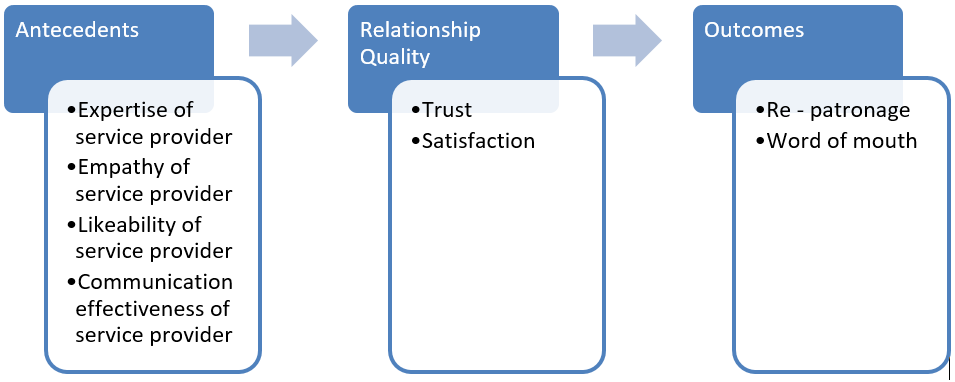
Figure 1 Relationship quality model in high credence services
(Source: Chen, ZX., Yizheng, S., and Da-Hai, D. An empirical study of relationship quality in a service setting, Marketing Intelliegence and Planning, Vol 26, No 1, 2008)
Figure 1 identifies the relationship between the antecedents of relationship quality and its outcomes in research conducted in Hong Kong by Chen and colleagues. They studied this framework in the health care service sector in Hong Kong and found that among the four antecedents, empathy, expertise, and communication effectiveness are positively correlated to trust, and communication effectiveness, empathy, and likeability are found to be significant predictors of customer satisfaction, while likeability and expertise of the service provider are not significant in influencing trust and customer satisfaction, respectively. It is interesting to note that expertise is a crucial indicator of trust but not satisfaction. The authors posit that satisfaction is likely to built after experiencing a service whereas expertise is knowledge that customers attempt to ascertain prior to purchase. This has important implications. Firstly, thought leadership is becoming an increasingly powerful way to demonstrate expertise and to some extent is indicative of the IQ of a firm. However, it is functional quality (service quality) which is a significant predictor of satisfaction because in many cases customers find it hard to judge the detailed technical quality of a product and hence use functional quality as an important indicator. To some degree, this is reflective of the firm’s EQ and has been shown to be a key measure of relationship strength and customer satisfaction. The findings in this study are similar to many found in other contexts and strongly suggest that firms need to focus on building relationships through a deeper understanding of customer value and needs. Additionally, research tools based on frameworks such as those depicted in the figure above can be extremely useful.
Service (Functional) Quality
Customers not only care that you do your job properly and that you are proficient at what you do, they also care how you deliver your services. It is reasonable to expect that in different settings customers would give different weighting to the importance of service quality, at least in terms of their intention to continue doing business with a firm as well as whether they would recommend the firm to others. Satisfaction and customer retention are strongly correlated and being able to identify the key variables that satisfy clients is worthwhile because a firm can then focus its efforts on those variables without wasting time on extraneous factors which are not so critical to the customer.
Since the technical quality of some products is hard to judge due to the information asymmetry between provider and customer, customers are likely to look at service quality to judge the relationship with the service provider. In this case, it could be argued that in relationships where the client is less knowledgeable about the services being provided should stress the service quality and social aspects of the interaction in order to relay quality perceptions to the customer. As customers become more familiar with expectations in terms of technical quality this criteria relevance may increase and hence the firm should look to ways to communicate the technical quality of what it is doing. If a customer is familiar with the technical jargon of professional speak then perhaps it isn’t so bad to use technical language with the customer.
Measuring service quality: SERVQUAL and other Scales
Even though the SERVQUAL scale is the most widespread tool for analyzing service quality its application in non western cultures and business to business markets has been questioned. Some studies have found the five dimensions above to be poor predictors of service quality in the Asian context. For instance, reliability is often considered to be one of the most important predictors of service quality in the west but less so in Asia where customers often have lower expectations of services. There are also additional dimensions relevant to Asia (such as politeness) that are not covered in the SERVQUAL scale. Aside from the cultural issues with the scale, there are also problems associated with its applicability to the B2B market.
Gounaris proposes a model called INDSERV which in his study of B2B services was a better measure of service quality. The four dimensions combine to make up the industrial customer’s perception of service quality:
- Potential quality. This relates to the search attributes that customers use in order to evaluate the provider’s ability to perform the service before the relationship has actually begun. Potential quality is particularly important for business-to-business services because of the increased complexity and degree of customization that characterizes them, which results in a greater degree of uncertainty regarding the performance of the service, even if the provider is selected from a list of existing providers.
- Hard quality. This pertains to what is being performed in the service process. It refers to the service blueprint the provider uses, the accuracy with which the service is delivered and so on.
- Soft quality. This is concerned with how the service is performed during the service process. It relates to the front-line personnel and the interaction they develop with the customer’s employees. It captures how open the service provider is to ideas and suggestions from the customer, the service provider’s benevolence and communicated willingness to watch the customer’s best interest. These qualities help to develop a positive climate during the service encounter and facilitate the process of aligning the provider’s service with the customer’s specific requirements.
- Output quality. This explains the customer’s concern regarding the actual offering delivered. It captures not only the results of the technical efforts to deliver the service, but also the impact that the service delivered eventually produces for the buying organization.
A Note on Cultural Differences
Whilst it is tempting to look at Asian cultures as homogeneous and indeed that culture can be studied at the national level (as in the work of Geert Hofstede discussed in previous chapters) it is important to note that Asia is highly diverse and that the parsimonious either/or cultural analysis frameworks of western contexts may not fit altogether well in Asian contexts which exhibit a certain dualism. In addition, since many corporations in Asia have extremely diverse work forces it may be erroneous to attempt to treat all potential relationships the same way since an Asian national working in Singapore for example may well have been educated in the US and the impact of organizational culture could well take precedent over national cultural origins. Cultural differences and nuances should be kept in mind when developing a practice in Asia but caution should be used when making generalizations for the purposes of market segmentation considering the diversity within Asia and potential client firms. Firm leaders should be aware of these cultural differences but take a customized approach to different situations. For example, James Barry and his colleagues looked at relationships strength in B2B services by not only examining the different facets that affect the strength of a relationship but also by looking at the cultural differences. They found that perceived value and switching costs were key indicators of relationship quality and strength but found no differences based on cultural dimensions.
There are a few reasons for such outcomes and why some research based on national culture shows differences and other studies do not. Part of this can be explained by the level of analysis. National cultural analysis examines the nature of difference at a highly aggregate level while culture can manifest itself at different levels. For example, ethnic culture, regional culture, as well as firm culture can impact a persons perceptions and behaviours and in some cases prove a more powerful indicator than national culture. Leaders in Asia wishing to use relationship tools to enhance their standing with clients should be prepared to delve more deeply into cultural variations within Asian countries as well as within different types of firms. This should better enable the development of relationship strategies and network formations than if the firm attempts to use a blanket approach.
Marketing is dead, long live marketing!
This is going to be a rant somewhat but also, I hope, a critical perspective of marketing and its role in the modern knowledge firms. When Regis McKenna said marketing is everything, he wasn’t joking. Since the days of the ground breaking article ‘Marketing Myopia’ in the Harvard Business Review (1960) by Theodore Levitt which implored businesses to define themselves by customer need, marketing has been on a topsy turvy ride of increasing and decreasing influence in the business world.
The influence I am talking about is its role in strategy and firm performance. It was Peter Drucker who back in the 1950s said a business has only two functions: marketing and innovation. How prophetic those words were as research now demonstrates that it is indeed marketing (in the form of a marketing culture) that has the most significant impact on firm performance and profitability. It is also marketing which enables the innovative capability of the firm.
So what is the problem? The problem is marketing as it is practiced and applied today in many organizations is not the marketing Peter Drucker, Regis McKenna, or Ted Levitt were talking about. The way in which marketing has been relegated to a function is inhibiting its potential impact on firm performance. The never ending stream of tactical level initiatives firms under go in the guise of enhancing customer value is not only laughable, it is destructive. Some examples:
- New brochures
- New web sites
- Sales training
- Events and seminars
- Promotions such as ads, direct mail etc
- Product launches
- Marketing assets and PPT decks ad infinitum
The list could be endless but you get the drift. What they should be doing is looking at the competitiveness of the firm and understanding how, from a strategic perspective, the firm can enhance customer value. A spruced-up web site doesn’t cut it!
So what marketing am I talking about? Think about it like this. A firm’s profitability is contingent upon customers. Money comes from customers! But so does a lot more such as reputation, referrals, and loyalty. Marketing is the mind set and culture which allows a firm to ensure customers are satisfied.
What is it that makes customers do this? In theory it’s simple. Customers want value from their supplier in terms of know how and knowledge, service quality and satisfaction, as well as having a meaningful impact on their business. It is marketing, in its truest strategic sense that gives a firm the capability and platform to achieve this value. Firstly, marketing makes sure your firm is customer centric and that anything you do is oriented towards enhancing customer value. Moreover, marketing recognizes that you cannot please everyone and hence forces you to focus your efforts where your capabilities give you an advantage in the market place. Selective diversification is the key as is the ability to be truly differentiated in the market place. It is marketing that has the answer to these questions.
What is wrong then? There is a fundamental misunderstanding within most organizations of what marketing is and hence it has lost influence. The root of this problem lies with the senior management and the culture they have instilled. Resistance among seniors is the biggest problem that is holding back many firms from changing. A faulty business model that relies on a sales orientation and a short term focus causes major issues. Organizations compete in two markets, for customers and for talent. Since the product of the firm resides in the intellectual capital of the firm (the heads of its people), customer value is determined to a large extent in the way that knowledge is shared, built on, and leveraged. Lack of work life balance, inequitable reward systems, unclear promotion track, as well as too many mundane tasks leaves people de-motivated and disloyal. A marketing culture forces your firm to focus on the things that matter to customers which in turn forces you to attack the underlying problems which are preventing the delivery of value. You cannot separate strategy, marketing, KM and HR, if you think you can, think again!
So what should I do? Start again and re think marketing as it was supposed to be utilized, in the key strategic processes of the firm and as a culture that has the most significant impact on firm performance. Understand that the strategy process today is not the same as it was even 10 years ago. It requires firm wide involvement and most importantly, the input, commitment, and buy in from the firm’s people. Eliminate the idea that your marketing is a support function and get them to help direct the strategic processes of the firm. Finally, stop equating marketing with sales, not all marketing initiatives can be measured using ROI and to think so is the ultimate fallacy. As Tim Ambler from the London Business School rightly points out, trying to measure the ROI on marketing in its entirety is like trying to measure the ROI on eating, if you don’t do it you die!
One last thing, you don’t need a marketing department to be successful, many successful firms don’t have distinct marketing departments. What they do have is a common understanding that marketing is everyone’s job. The most important marketers are the ones who interact with customers everyday.
Where to start? Take a long hard look at the list below from Harvard Business Review (Feb 2009) on the reinvention of management. It as good a starting point as any and you could just as easily call this the reinvention of marketing:
- Ensure that management’s work serves a higher purpose. Management, both in theory and practice, must orient itself to the achievement of noble, socially significant goals.
- Fully embed the ideas of community and citizenship in management systems. There’s a need for processes and practices that reflect the interdependence of all stakeholder groups.
- Reconstruct management’s philosophical foundations. To build organizations that are more than merely efficient, we will need to draw lessons from such fields as biology and theology, and from such concepts as democracies and markets.
- Eliminate the pathologies of formal hierarchy. There are advantages to natural hierarchies, where power flows up from the bottom and leaders emerge instead of being appointed.
- Reduce fear and increase trust. Mistrust and fear are toxic to innovation and engagement and must be wrung out of tomorrow’s management systems.
- Reinvent the means of control. To transcend the discipline-versus-freedom trade-off, control systems will have to encourage control from within rather than constraints from without.
- Redefine the work of leadership. The notion of the leader as a heroic decision maker is untenable. Leaders must be recast as social-systems architects who enable innovation and collaboration.
- Expand and exploit diversity. We must create a management system that values diversity, disagreement, and divergence as much as conformance, consensus, and cohesion.
- Reinvent strategy-making as an emergent process. In a turbulent world, strategy making must reflect the biological principles of variety, selection, and retention.
- De-structure and disaggregate the organization. To become more adaptable and innovative, large entities must be disaggregated into smaller, more malleable units.
- Dramatically reduce the pull of the past. Existing management systems often mindlessly reinforce the status quo. In the future, they must facilitate innovation and change.
- Share the work of setting direction. To engender commitment, the responsibility for goal setting must be distributed through a process where share of voice is a function of insight, not power.
- Develop holistic performance measures. Existing performance metrics must be recast, since they give inadequate attention to the critical human capabilities that drive success in the creative economy.
- Stretch executive time frames and perspectives. Discover alternatives to compensation and reward systems that encourage managers to sacrifice long-term goals for short-term gains.
- Create a democracy of information. Companies need holographic information systems that equip every employee to act in the interests of the entire enterprise.
- Empower the renegades and disarm the reactionaries. Management systems must give more power to employees whose emotional equity is invested in the future rather than in the past.
- Expand the scope of employee autonomy. Management systems must be redesigned to facilitate grassroots initiatives and local experimentation.
- Create internal markets for ideas, talent, and resources. Markets are better than hierarchies at allocating resources, and companies’ resource allocation processes need to reflect this fact.
- Depoliticize decision-making. Decision processes must be free of positional biases and should exploit the collective wisdom of the entire organization.
- Better optimize trade-offs. Management systems tend to force either-or choices. What’s needed are hybrid systems that subtly optimize key trade-offs.
- Further unleash human imagination. Much is known about what engenders human creativity. This knowledge must be better applied in the design of management systems.
- Enable communities of passion. To maximize employee engagement, management systems must facilitate the formation of self-defining communities of passion.
- Retool management for an open world. Value-creating networks often transcend the company’s boundaries and render traditional power-based management tools ineffective. New management tools are needed for building complex ecosystems.
- Humanize the language and practice of business. Tomorrow’s management systems must give as much credence to such timeless human ideals as beauty, justice and community as they do to the traditional goals of efficiency, advantage, and profit.
- Retrain managerial minds. Managers’ traditional deductive and analytical skills must be complemented by conceptual and systems-thinking skills.
Integrating marketing, promotion and sales
There is a massive amount of confusion regarding the role of marketing in many organizations. This confusion grows when you add in sales and business development (BD). It’s no accident that marketing and BD are known as ‘fee burners’ and relegated to back office (or mid office) functions since many organizations believe them to be exactly that. Even more so, they see little interaction between what they do and how marketing actually adds value to the customer. Marketing is the foundation of the value that professionals deliver to customers and rather than being a cost, revenue does not exist without it!
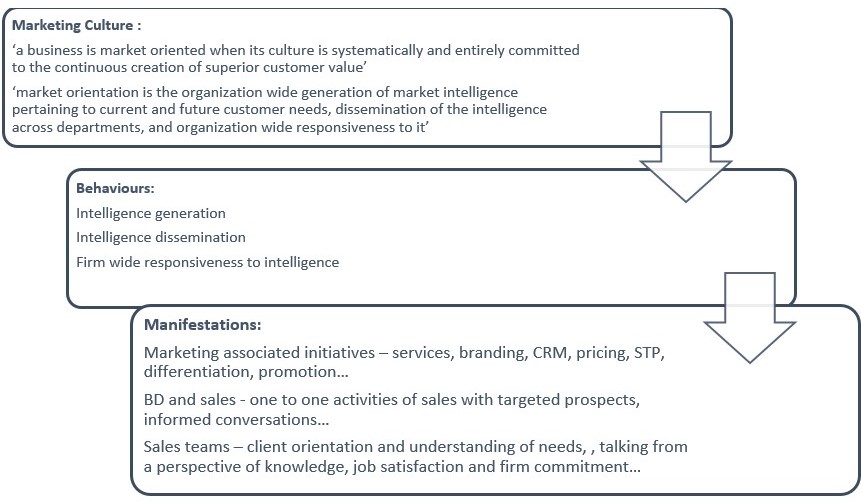
The above figure shows the explicit link between marketing (as strategy, in other words the orientation and culture of the firm), firm behaviours, and the link to the manifestations of marketing, BD, and the areas of sales team work that it affects. What this figure details is that aside from technical advice, customers demand an increasing amount of business advice and industry knowledge that is linked to the technical advice sales people provide. For a professional (and firm) to effectively differentiate themselves in the eyes of the customer, they must be able to deliver a level of value (whether through industry and technical know how, responsiveness, pro-activity etc) to customers that is different from what other providers can offer. Additionally, since a marketing culture is associated with job satisfaction and engagement, it acts as a motivator for sales people to engage in individual level market oriented behaviours which are aligned with the needs of customers. In this sense, marketing in its truest form becomes a key pillar in the work of sales teams and what they deliver to customers.
To get people within the firm to accept and fully understand this requires a change process that unfortunately is anathema to most organizations.
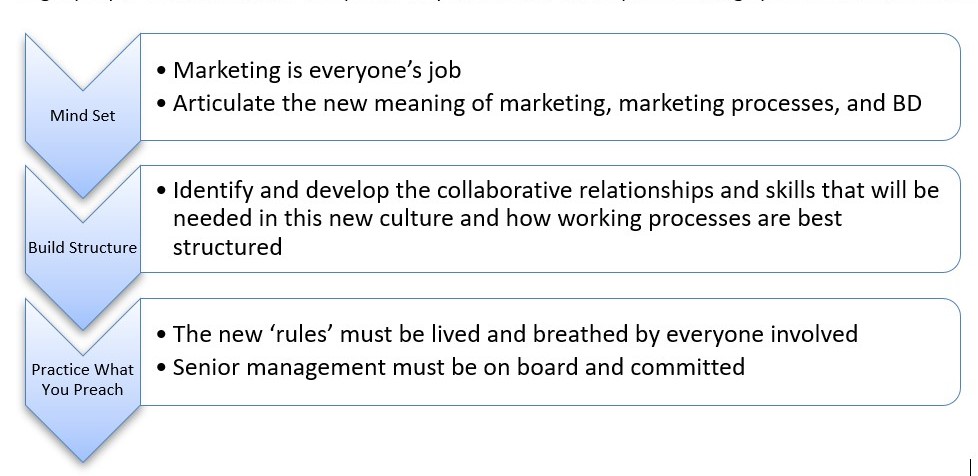
More than anything, it is crucial to fully articulate the meaning of marketing and how it differs to BD/sales and the tactical level marketing most firms recognize as the be all and end all of marketing. This process can be significantly enhanced by finding the pockets of excellence in the firm that this intuitively works well (and probably outside of the stated strategy of the firm) and using these (with senior management involved in training) as part of innovative learning programmes that go well beyond the standard training of most firms which create little lasting change.
The Disconnect Between Strategy Development & Execution
Organizations in the knowledge era face particular problems when attempting to develop strategic differentiation through strategic planning and execution. The key difference when compared to previous era’s is the fact that employees are the key drivers of successful execution but as highly independent knowledge workers it can be extremely hard to get them to share a vision and buy into organizational strategy which is crucial for strategy implementation. Not only that, since many workers have grown numb to the many strategic initiatives thrown at them, getting them to believe this time will be different is a major challenge.
In his book (Strategy and the Fat Smoker), David Maister states:
“In the last two-and-a-half decades, I have been trusted to see a large number of strategic plans from a wide variety of professional firms around the world, including direct competitors. What is immediately noteworthy is how similar (if not identical) they all are.”
He goes on to say:
“Real strategy lies not in figuring out what to do, but in devising ways to ensure that, compared to others, we actually do more of what everyone knows they should do.”
The view of strategy that Maister takes is one based on operational and execution success, one which I believe should be more widely understood and accepted within any firm. The alternative view is propagated in the positioning school of strategy such as that proposed by Michael Porter (Harvard professor) who claims that firms should seek unique strategic positions based on detailed analysis of the market. Similar views are suggested by the authors of the book, Blue Ocean Strategy (W. Chan Kim and Renee Mauborgne) who suggest firms should reconstruct the value proposition and create new, uncontested market spaces. Their research, and similar to much academic research which compares the success and failure of comparative firms, often suffers from what Phil Rosenzweig called the Halo effect in his book of the same name. He says:
“Much of our thinking about company performance is shaped by the Halo Effect, which is tendency to make specific evaluations based on a general impression. When a company is growing and profitable, we tend to infer that it has a brilliant strategy, a visionary CEO, motivated people, and a vibrant culture. When performance falters, we’re quick to say the strategy was misguided, the CEO became arrogant, the people were complacent, and the culture stodgy. Using examples like Cisco, ABB, IBM, Lego, and more, I show how the Halo Effect is pervasive in the business world. At first, all of this may seem like harmless journalistic hyperbole, but when researchers gather data that are contaminated by the Halo Effect—including not only press accounts but interviews with managers—the findings are suspect. That is the principal flaw in the research of Jim Collins’s Good to Great, Collins and Porras’s Built to Last, and many other studies going back to Peters and Waterman’s In Search of Excellence. They claim to have identified the drivers of company performance, but have mainly shown the way that high performers are described. My book is the first to show why, for all their claims of voluminous data and rigorous analysis, their research is fundamentally flawed—and why their conclusions about the drivers of company performance are unfounded”.
There is little doubt that strategy development and execution must be closely tied together for any strategic initiative to be successful, especially in the knowledge era where it is the workers/employees who live and breathe the strategy every day in their interactions with the market place. It’s no use developing a customer centric strategy which is intended to cross sell the firms services if the people inside the firm won’t commit to learning about other functions and thinking about how these can add value to the needs of the customer. To change the behaviour of employees one must address the underlying cognitive issues that are driving them towards the same behaviour day in and day out, these may include:
- Poor leadership – people observe senior management and don’t see them practicing what they preach
- Remuneration and management structures – people don’t see how their investment in bringing the strategy to life fits the existing structure of the firm and its incentive systems
- Knowledge and skills – people don’t believe they have the knowledge and skills they need to bring the strategy to life
- Link – people don’t see the link between certain behaviors, initiatives (such as KM) and firm performance
- Competitiveness – people don’t understand the foundation of customer value and competitiveness and think that basic training can solve sales declines
- Marketing – senior management who believe that marketing is about cost as opposed to creating market insight and customer value
- Time – partners who think they don’t have the time to engage in non billable activities since they are too ‘busy’ with client work and such time is not recognized as an investment by the firm
- Success – management who believe the firm is doing well and will continue to do in the future, so why change?
There are probably many other cognitive factors one could list, but addressing the underlying reasons why people won’t change their behaviour would be time and money better spent than engaging in the endless stream of seminars and training that most firms seem to think will drive the culture change for successful implementation.
In reality, firms have an intended strategy which then seems to divert based on what Henry Mintzberg called emergent strategies into a realized strategy. This learning view of strategy can be leveraged into producing the desired behaviour change needed for the successful execution of a firm’s strategy. There are often pockets of success in the firm where groups or sub sets of a group are producing excellent results that are somewhat aligned with the firm’s new strategy even though this has developed emergently and through trial and error of the people involved. If these examples could be studied, ‘packaged’ and shared with other groups/functions within the firm they can create a compelling example of the benefits of a clear strategy and how people within their own firm make it actually work. Even better would be to get these people who are demonstrating excellence to be involved in the ‘teaching’ of these success examples throughout the firm in the form of participant centred workshops where cases and interactive discussion are the foundations of reflective learning. These examples can be extremely powerful in showing reticent teams the tangible benefits of change and when aligned with other firms processes and systems can go along way in helping people engage in the required behaviour changes.
In their book, The Workforce Scorecard (2005, HBS Press), and their later book The Differentiated Workforce (HBS Press, 2009), Becker, Huselid, and Beatty make a strong case for altering the way firms determine, measure and reward key performers by focusing on their contribution to the strategic capabilities and direction of the firm, as opposed to a persons level of seniority and job title. Whilst their recommendations may be somewhat narrow (for example, differentiating the work force by implementing strategy may be just as appropriate as by capability) the authors make some interesting points that when tied together with what we know about firm performance, can be extremely beneficial in creating the desired change of people’s behaviour and recognizing how various processes intertwine to enhance performance. The ideas of the Balanced Scorecard (Kaplan and Norton) could also be used but in a wider perspective as proposed by Neely, Adams and Kinnerley in their book The Performance Prism which takes a much broader perspective of performance management. One I think better which is better suited to the context of the knowledge era.
Of course, such systems have unintended consequences which lead to what Henry Minztberg calls emergent and realized strategies as firm members engage in behaviours that they believe are beneficial to them and aligned with the implicit norms of the firm. The benefits of trying to identify and codify these variations in execution is the value creation it can add to the firm since there will always be a group of people who are creating client value that does not necessarily align with the stated strategy and objectives of the firm. This creates a basis for powerful learning and the potential creation of new wealth creating opportunities.
In larger firms there will be examples of this realized strategy that are extremely positive and could be used as case examples of what the firm is actually trying to achieve. These strategies could be tied back to the systems, processes, original strategy, leadership, and culture of the firm that demonstrates what works and what could be improved. The problem is too many firms try to change behaviour (and hence implement strategy) through isolated non systemic approaches which don’t address the key influences on the strategy execution behaviours of people which in reality are many (an obvious one is archaic remuneration systems). Additionally, isolated training activities such as sales training have little impact when conducted this way.
Research conducted by Janine Waclawski (Human Resource Development Quarterly, 2002) shows that large scale change efforts (defined as those that address mission and strategy, culture, leadership, and structure) produce better performance outcomes than those which only tackle a sub set of these factors. Since we know from empirical research that a market orientation is the most significant factor that affects firm performance (although this research is also subject to the halo effect), looking at the strategy execution and development process to initiate behaviour change from an holistic perspective makes sense.
Rex Roundtable Presentation: Business Model Innovation in the Fitness Industry – could Big Tech lead the way?
I was lucky enough to be invited to speak at Rex on June 23rd. Slides can be downloaded here.
Future Business Model Innovation for a Fitness Equipment Manufacturer – a disruptive guide for manufacturers and operators (working paper)
The idea that competitive advantage once found should be sustained and protected against new entrants is etched into the business psyche of many leaders. Organizations often stick to the same way of doing things even when it is clear the competitive landscape has changed. In large part brought on by industry 4.0, advantages are now seen as transient and industry definitions as less relevant. Organizations should be on a continual search for new ways of doing business as core businesses come under attack or eventually decline. Whilst innovation in product, process or service is common, business model innovation (BMI) is a less common and understood element of the innovation system…download the full paper here
 Strategy & Competitiveness