According to Mark Bertolini, CEO of Aetna; ‘Creating new business models is a leadership challenge. In order to create those new businesses in any organization, I don’t care how old it is, you have to start to look at what is going to be the operating model that’s going to make that new business commercially viable and sustainable for the long run’.
By definition, working on BMI means working under uncertainty. The ideas and thinking that got you to where you are today is not the same thinking that will get to where you need to be tomorrow. Traditional strategy processes built on industrial economic thought are much less relevant in a world of competitive arenas, transient competitive advantage, and eco systems. Firms must be cautious not to conflate current digital initiatives with business transformation. In the fitness industry we are seeing a flood of on demand and live content, move to e commerce platforms to benefit from consumer demand driven by COVID, investment in apps etc, but none of this is BMI. According to Leinwand and Mani (HBR, March 2021):
‘Companies need to step back and fundamentally reconceive how they create value. They need to reimagine their place in the world, rethink how they create value through ecosystems, and transform their organizations to enable new models of value creation. The bottom line is companies need to shape their own future, recognizing that the world has fundamentally shifted, and that they must find their purpose in it. If you can’t answer the questions “Why are we here?” or “What unique value do we add for our customers?” then you are likely at best just staying in the game’.
They go on to say that organizations must:
Reimagine your place in the world, instead of focusing on digitizing what you already do. Companies that transform for success in the digital age define their reason for being in terms of the bold value they create for their customers (and their customers’ customers), and why. They take advantage of new technology not to copy what everyone else is doing, but to advance their own missions by investing in the differentiating capabilities that allow them to deliver on their purpose. Filling their new place in the world with life often requires them to shed old business models, assets, and beliefs about value creation.
Create value through ecosystems, rather than trying to do it all alone. Successful companies in the digital age recognize that the way to remain relevant comes from working together with an ecosystem of players in order to deliver the ambitious value propositions that customers want and to quickly innovate and scale up the incredible capabilities that are needed. Operating in this way requires leaders to think about value creation more boldly, question what their organization must truly own, and be prepared to open up to competitors and give up traditional sources of revenue in order to address some of the most fundamental customer needs.
Re-imagine your organization to enable a new model of value creation, rather than asking people to work in new ways within the confines of the old organizational model. Winners in the digital era break up old power structures so that new ideas and capabilities can be scaled more collaboratively. They put in place outcome-oriented teams tasked with collaborating across the organization and work with their ecosystem partners to deliver the differentiating (and often cross-functional) capabilities they need to win.
In traditional organizations and theory, strategy has been considered the domain of top management and that their job is to strategize and once developed, sell the strategy and get buy in from the rest of the organization. There are problems with this type of approach. Firstly, top management are themselves immersed in the day to day management of the organisation and hence have limited capacity to scan and interpret the market. Secondly, an increasing number of industries are driven by knowledge workers, these highly intelligent and independent workers do not take well to what they perceive as undue top down influence and control. David Maister (ex Harvard Professor), an expert in working with knowledge intensive firms, suggests that organisations take a bottom up approach to strategy meaning that people at all levels have a major say in the strategy process.
There are many concepts and tools that can aid in bringing this new approach to life including lean start up, innovators method, agile, design thinking, bossa nova, the fifth discipline, systems thinking, cybernetics, complexity thinking, scenario planning etc. There are some great tools available now such as those developed by Strategy Tools and Strategyzer. Again, without the right culture and structure, none of these are likely to make much impact.
As Steve Blank points out in his frequently cited article in HBR, often organizations know they need to change but play a game of organizational ‘whack a mole’ in a futile attempt to swat every problem that pops up without understanding the root cause. He calls this innovation theatre. He goes on to say that organizations must build a mind set, culture and process that becomes innovation doctrine. In their article (How Leaders Delude Themselves about Disruption, MIT Sloan Management Review, 2020), Scott Anthony and Michael Putz describe the 4 lies that leaders tell themselves including that their organization is immune (we are safe) and that their people are not up to the task. Cognitive bias affects leaders as much as it does anyone else. Assuming people are not up to the task creates a self-fulfilling prophecy. Leaders, and organizations, need to become much more self aware in order to create strategic clarity.
Critically, organizations need to stop thinking along the lines of everything is knowable and get used to less than concrete concepts that do not fit in with arbitrary yearly budgets, targets, or hurdle rates that have nothing to do with the future sustainability of the business.
Organizations in the knowledge era face particular problems when attempting to develop strategic differentiation through strategic planning and execution. The key difference when compared to previous era’s is the fact that employees are the key drivers of successful execution but as highly independent knowledge workers it can be extremely hard to get them to share a vision and buy into organizational strategy which is crucial for strategy implementation. Not only that, since many workers have grown numb to the many strategic initiatives thrown at them, getting them to believe this time will be different is a major challenge.
In his book (Strategy and the Fat Smoker), David Maister states:
“In the last two-and-a-half decades, I have been trusted to see a large number of strategic plans from a wide variety of professional firms around the world, including direct competitors. What is immediately noteworthy is how similar (if not identical) they all are.”
He goes on to say:
“Real strategy lies not in figuring out what to do, but in devising ways to ensure that, compared to others, we actually do more of what everyone knows they should do.”
The view of strategy that Maister takes is one based on operational and execution success, one which I believe should be more widely understood and accepted within any firm. The alternative view is propagated in the positioning school of strategy such as that proposed by Michael Porter (Harvard professor) who claims that firms should seek unique strategic positions based on detailed analysis of the market. Similar views are suggested by the authors of the book, Blue Ocean Strategy (W. Chan Kim and Renee Mauborgne) who suggest firms should reconstruct the value proposition and create new, uncontested market spaces. Their research, and similar to much academic research which compares the success and failure of comparative firms, often suffers from what Phil Rosenzweig called the Halo effect in his book of the same name. He says:
“Much of our thinking about company performance is shaped by the Halo Effect, which is tendency to make specific evaluations based on a general impression. When a company is growing and profitable, we tend to infer that it has a brilliant strategy, a visionary CEO, motivated people, and a vibrant culture. When performance falters, we’re quick to say the strategy was misguided, the CEO became arrogant, the people were complacent, and the culture stodgy. Using examples like Cisco, ABB, IBM, Lego, and more, I show how the Halo Effect is pervasive in the business world. At first, all of this may seem like harmless journalistic hyperbole, but when researchers gather data that are contaminated by the Halo Effect—including not only press accounts but interviews with managers—the findings are suspect. That is the principal flaw in the research of Jim Collins’s Good to Great, Collins and Porras’s Built to Last, and many other studies going back to Peters and Waterman’s In Search of Excellence. They claim to have identified the drivers of company performance, but have mainly shown the way that high performers are described. My book is the first to show why, for all their claims of voluminous data and rigorous analysis, their research is fundamentally flawed—and why their conclusions about the drivers of company performance are unfounded”.
There is little doubt that strategy development and execution must be closely tied together for any strategic initiative to be successful, especially in the knowledge era where it is the workers/employees who live and breathe the strategy every day in their interactions with the market place. It’s no use developing a customer centric strategy which is intended to cross sell the firms services if the people inside the firm won’t commit to learning about other functions and thinking about how these can add value to the needs of the customer. To change the behaviour of employees one must address the underlying cognitive issues that are driving them towards the same behaviour day in and day out, these may include:
Poor leadership – people observe senior management and don’t see them practicing what they preach
Remuneration and management structures – people don’t see how their investment in bringing the strategy to life fits the existing structure of the firm and its incentive systems
Knowledge and skills – people don’t believe they have the knowledge and skills they need to bring the strategy to life
Link – people don’t see the link between certain behaviors, initiatives (such as KM) and firm performance
Competitiveness – people don’t understand the foundation of customer value and competitiveness and think that basic training can solve sales declines
Marketing – senior management who believe that marketing is about cost as opposed to creating market insight and customer value
Time – partners who think they don’t have the time to engage in non billable activities since they are too ‘busy’ with client work and such time is not recognized as an investment by the firm
Success – management who believe the firm is doing well and will continue to do in the future, so why change?
There are probably many other cognitive factors one could list, but addressing the underlying reasons why people won’t change their behaviour would be time and money better spent than engaging in the endless stream of seminars and training that most firms seem to think will drive the culture change for successful implementation.
In reality, firms have an intended strategy which then seems to divert based on what Henry Mintzberg called emergent strategies into a realized strategy. This learning view of strategy can be leveraged into producing the desired behaviour change needed for the successful execution of a firm’s strategy. There are often pockets of success in the firm where groups or sub sets of a group are producing excellent results that are somewhat aligned with the firm’s new strategy even though this has developed emergently and through trial and error of the people involved. If these examples could be studied, ‘packaged’ and shared with other groups/functions within the firm they can create a compelling example of the benefits of a clear strategy and how people within their own firm make it actually work. Even better would be to get these people who are demonstrating excellence to be involved in the ‘teaching’ of these success examples throughout the firm in the form of participant centred workshops where cases and interactive discussion are the foundations of reflective learning. These examples can be extremely powerful in showing reticent teams the tangible benefits of change and when aligned with other firms processes and systems can go a long way in helping people engage in the required behaviour changes.
In their book, The Workforce Scorecard (2005, HBS Press), and their later book The Differentiated Workforce (HBS Press, 2009), Becker, Huselid, and Beatty make a strong case for altering the way firms determine, measure and reward key performers by focusing on their contribution to the strategic capabilities and direction of the firm, as opposed to a person’s level of seniority and job title. Whilst their recommendations may be somewhat narrow (for example, differentiating the work force by implementing strategy may be just as appropriate as by capability) the authors make some interesting points that when tied together with what we know about firm performance, can be extremely beneficial in creating the desired change of people’s behaviour and recognizing how various processes intertwine to enhance performance. The ideas of the Balanced Scorecard (Kaplan and Norton) could also be used but in a wider perspective as proposed by Neely, Adams and Kinnerley in their book The Performance Prism which takes a much broader perspective of performance management. One I think better which is better suited to the context of the knowledge era.
Of course, such systems have unintended consequences which lead to what Henry Minztberg calls emergent and realized strategies as firm members engage in behaviours that they believe are beneficial to them and aligned with the implicit norms of the firm. The benefits of trying to identify and codify these variations in execution is the value creation it can add to the firm since there will always be a group of people who are creating client value that does not necessarily align with the stated strategy and objectives of the firm. This creates a basis for powerful learning and the potential creation of new wealth creating opportunities.
In larger firms there will be examples of this realized strategy that are extremely positive and could be used as case examples of what the firm is actually trying to achieve. These strategies could be tied back to the systems, processes, original strategy, leadership, and culture of the firm that demonstrates what works and what could be improved. The problem is too many firms try to change behaviour (and hence implement strategy) through isolated non systemic approaches which don’t address the key influences on the strategy execution behaviours of people which in reality are many (an obvious one is archaic remuneration systems). Additionally, isolated training activities such as sales training have little impact when conducted this way.
Research conducted by Janine Waclawski (Human Resource Development Quarterly, 2002) shows that large scale change efforts (defined as those that address mission and strategy, culture, leadership, and structure) produce better performance outcomes than those which only tackle a sub set of these factors. Since we know from empirical research that a market orientation is the most significant factor that affects firm performance (although this research is also subject to the halo effect), looking at the strategy execution and development process to initiate behaviour change from an holistic perspective makes sense.
The concept of innovation theatre was brought to the public eye by Steve Blank in his 2019 HBR article (Blank is a Stanford Professor and considered by many to the father of the lean movement).
Essentially, organizations that engage in innovation theatre engage in initiatives to signal that change is happening but in actuality have little impact on a firm’s go to market capability and value proposition. It is characterized by incoherent, superficial, top down, and numerous so called changes that do little to enhance employee motivation and company performance (in fact they have the opposite effect).
Whilst innovation theatre is predominantly applied to innovation processes within a firm, all change is some type of innovation. I will expand a little here and call the concept box ticking. What characterizes a box ticking firm?:
Creates new layers or positions without redesigning work or addressing culture
Launches workshops, seminars, training etc (such as culture workshops) without any linkage to the way the organization works or with no follow through
Creates the same endless PPTs and reports with no action
Adopts the flavour of the month driven by senior leaders
Functional silos reign supreme despite talks of the need for teamwork
Focuses only on lag indicators with little thought to lead indicators
Lots of meetings and ideation with little follow up and integration
Pretends to get employee input when the decisions have already been made
Has no formal process for talent development and management but emphasizes its importance
Loves a good mission statement etc but does not live by those values
Overcoming box ticking is conceptually quite straight forward yet challenging in execution. It requires an honest assessment of where the organization is, getting broad stakeholder involvement. It will then require real change addressing the underlying issues the organization faces. Anything else is basically band aid management. Processes must be embedded that create customer value (it must mean something to the customer). This is the essence of strategy, which is:
“A strategy is the how. A coherent, integrated set of initiatives and concepts that will move the organisation forward in a unified manner to achieve transient advantage. It is fluid in movement but set in direction”.
‘We provide a complete range of … equipment to meet all your customer needs. Based on the latest science and advances in technology, our premium equipment is designed to offer the best user experiences… Known for industry leading reliability and service, our solutions will make sure your business stands out from the crowd.’
If this VP sounds generic, it’s because it is. Go to the web site of any major manufacturer, remove the brand name and pictures, and you will be hard pressed to tell one brand from another. Fill in the blanks with any company or product and you probably cover 90% of the superficial VPs out there.
There are no universally accepted definitions of a value proposition but there are a growing number of tools that can help in the development of compelling value propositions. Rather than try to focus on a single definition the following list of characteristics by Alex Osterwalder provides a solid guide:
Are embedded in great business models
Focus on few pain relievers and gain creators, but do those extremely well
Focus on jobs, pains, or gains that a large number of customers have or for which a small number is willing to pay a lot of money
Align with how customers measure success
Focus on the most significant jobs, most severe pains, and most relevant gains
Differentiate from competition in a meaningful way
Address functional, emotional and social jobs all together
Outperform competition substantially on at least one dimension
Are difficult to copy
Focus on unsatisfied jobs, pains, and gains.
According to Hub Spot, the value proposition explains how your solution solves customer problems/improves their situation, what specific benefits they can expect, and why customers should buy from you over your competitors. It is not a slogan or positioning statement.
Below are a few meaningful VPs from traditional manufacturing firms which have adopted Business Model Innovation (BMI) using a product service system (sometimes known as servitization):
Hilti – Hilti offers holes not hammers. With its Tool Fleet Management System, the company provides guaranteed availability, maximum uptime, with no upfront costs. Customers get access to the best tools whenever and wherever they need them.
Kone cranes – At Konecranes, we are not just lifting things, but entire businesses. We have real-time knowledge of how millions of lifting devices perform. We use this knowledge, around the clock, to make our customers’ operations safer and more productive.
Otis Elevators – Using smart, internet of things (IoT) technology, Otis ONE™ brings you and your passengers the next generation of service. With 24/7 real-time, connected service combined with our foundational historic data your elevator experience will be transformed as you receive new insights. Transparent, proactive, predictive: this is Otis ONE™.
Royal DSM – the new resin addresses the growing market demand for powder coatings that can be cured quicker or at lower temperatures. In particular, the Uralac® EasyCure P 3225 resin can either be cured in just 5 to 6 minutes at 180ºC, compared to the 10 to 12 minutes of market alternatives, or in 12 minutes at 160ºC. In this way, the resin enables higher production output and can help prevent bottlenecks, as well as lowering energy consumption, reducing natural gas usage by up to 30%.
Siemens Health Care – We assist you in reducing risk. We increase machine uptime and increase your profitability.
What is striking about these VPs is how similar they are despite coming from very different industries. They focus on a few key resonating points which act almost as unique selling propositions (USP) whilst aligning with customer measures of success, namely reductions in cost and improved productivity. They are also embedded in strong business models which make imitation difficult. As Didier Bonnet and George Westerman explain (The New Elements of Digital Transformation, MIT Sloan Management Review, 2021), as some firms are still implementing traditional automation approaches such as ERP and product life cycle management, others are moving far ahead by digitally reinventing operations. ‘Thanks to the growing availability of cheap sensors, cloud infrastructure, and machine learning, concepts such as Industry 4.0, digital threads, and digital twins have become a reality. Digital threads connecting machines, models, and processes provide a single source of truth to manage, optimize, and enhance processes from requirements definition through maintenance (p.4)’.
VPs are not just statements. They are fundamentally strategy questions that address the entire go to market (GTM) capabilities of the firm. If the underlying competences are not there to deliver on that VP that the entire dance that most organizations engage in when working through VPs is nothing but innovation theatre.
Below is a useful model from Camlek (2010) that depicts a journey from basic product features to actual customer value that is tangible. If you are not able to get to customer value, something needs changing in your organization.
There are a number of ways of thinking about BMI and design (and how to mobilise the company to innovate more broadly) using a variety of lenses including systems thinking, mental models, complexity theory as well as varied schools of strategy thought with a major focus on culture (including learning and knowledge based strategies).
I will focus on some specific methodologies proposed by Amit and Zott (Business Model Innovation Strategy, 2020) leveraging entrepreneurial approaches – that is discovery driven planning and lean start up. These should be considered as complements to other approaches rather than an either or approach.
Discovery driven planning (DDP) was originally developed by Ian MacMillan (a Professor at Wharton) and Rita McGrath (a Professor at Columbia and author of numerous books including Seeing Around Corners). In her article from Long Range Planning (2010), McGrath explains that conventional approaches to planning suffer from a mismatch between the knowledge a firm actually possesses and the knowledge its planning systems assume it possesses. As a firm ventures into new business models, increasing numbers of the underlying assumptions it makes will differ from those inherent in its existing models. In conventional strategic planning, the measure of a plan’s success is how close your projections came to what happened later on. This is nonsensical in a high-uncertainty environment – if you could predict what was going to happen accurately, so could everyone else, and there would be very little advantage to be gained. The goal of a discovery-driven plan is therefore to learn as much as possible at the lowest possible cost, bringing us to the theme of experimentation. DDP is a methodology to facilitate different ways of thinking in established firms. They key steps in DDP are (from Amit and Zott, ibid, and McGrath, ibid):
Framing – this asks mangers to define long term success and then reason back to figure out what would be needed to achieve that success (i.e. reverse income statement)
Benchmarking – the business model is benchmarked against competitive models and market demand
Deliverables and key process metrics – critical assumptions are highlighted such as willingness of customers to pay, competences needed by the organization to implement
Key check points and parsimony – this is where key assumptions are tested using various methods such as market studies, pilot tests, customer research etc. This resembles rapid prototyping and gives a firm the opportunity to evaluate, pivot, and reject an idea if necessary, with limited resource investment
DDP has many advantages grounded in its philosophy around experimentation and learning. It also leads to evidence based decisions which can overcome the often problematic biases and self serving opinions that surface during the strategy process. One of the major challenges with this approach is that it is in direct opposition to the traditional linear staged gate approach to planning that most established firms take.
The lean start up methodology has many similarities to DDP and other experimentation approaches and is most associated with work of people like Steve Blank (now a Stanford adjunct professor) and Eric Ries (author of the Lean Start Up). The idea of lean is to shorten product development and quickly find a viable business model.
According to de Faria et al (Procedia Computer Science, 2021), the Lean Start Up methodology consists of a scientific, hypothesis-driven approach to entrepreneurship, where entrepreneurs translate their vision (i.e. business idea) into falsifiable hypotheses which are embedded in a first version of a business model. These hypotheses are then tested through a series of minimum viable products (MVPs). From the perspective of business models, this would be the development of minimum viable business models (MVBM).
Group
Hypothesis
Operations/ costs
Can we support customer service needs in a timely and cost effective manner
What competences do we have that can be leveraged
Marketing/ market conditions and customer behavior
Is the market ready for a subscription concept
Can we market the need effectively
Marketing resources needed are within our current resources
Financial
The market size matches our revenue needs
The average selling price per unit covers costs and expected margins
Technology / Capabilities
We have the bandwidth for education and ongoing support for customers
Our ERP systems provide the necessary one source of truth
Value Proposition
The concept clearly differentiates itself from other similar concepts in the market
The VP will be compelling to customers
Example Hypotheses (Source: authors own analysis)
Once you have a key set of hypotheses for testing (see examples above), you would consider ways to test and validate these. For example, a firm could do some internal research with the technical and customer service team to see whether they have the resources and expertise to provide the level of service needed under a new business model.
The application of lean to BMI certainly has its limitations and criticisms but overall it provides a structured process to the development of new business models (depicted in the figure below) providing the key benefits of reduced market risk and CAPEX.
Business Model Development Process, Experimentation, and Lean Start Up in Practice (Source: Bocken, N and Snihur, Y (2020) Lean Start Up and the Business Model: experimenting for novelty and impact. Long Range Planning, Vol 53, No 4, Aug)
One of the most well known examples of BMI and the application of a rigorous process to designing new business models is that of Bosch. The company was struggling with the challenges being presented by IOT and the digitization of various industries. These are the questions that Bosch was grappling with when they decided to create an innovation funnel for their ideas, which would run on evidence rather than opinions. This innovation funnel enabled Bosch to go from 214 unvalidated but interesting ideas, to 19 validated and scalable growth engines. The below figure identifies the Bosch process for BMI.
The Bosch Business Model Development Framework
Innovation does not need to be a hit or miss affair nor do you have to bet the house. A well developed process supported by the right culture separates from those who do this well and those that engage in innovation theatre.
It is not always apparent why organizations choose certain actions and how this affects their marketing and strategic management initiatives, particularly if we consider that the overriding objective of downsizing is to improve operating efficiency and competitiveness.
Downsizing can be defined as;
‘a set of activities, undertaken on the part of management of an organization, designed to improve organizational efficiency, productivity, and/or competitiveness. It represents a strategy implemented by managers that affects the size of the firm’s workforce and the work processes used’ (Freeman and Cameron, 1993, p.10).
However, this assumes some type of comprehensive plan, which may or may not in fact exist. For example, effects on work processes suggests some kind of re-engineering or systemic intervention, whilst most companies have no plan associated with downsizing other than to reduce costs (Blanchard and Randolph, 1996). Indiscriminate downsizing is not an effective approach.
The body of literature on downsizing is both large and varied, having analysed macro and micro level models to explain the causes and effects of the change (Shaw and Barrett-Power, 1997).
Researchers have studied financial outcomes (e.g. Barker et al., 1998; Cascio et al., 1997; Worrell et al., 1991), changes in organizational structure (e.g. DeWitt, 1993; Littler and Innes, 1999; McKinley, 1992), as well as the impact on those who lose their jobs (e.g. Leana and Feldman, 1992) and those who are survivors (e.g. Armstrong-Stassen, 1998; Brockner, 1988; Mishra and Spreitzer, 1998).
Cameron et al. (1991) has found that the most effective downsizing firms spoke in terms of duality, both a short term internal approach, and a long term external approach. This may be so because an effective change model must be customer focused and market driven in its external relations, and process focused and team oriented in its internal operations (Carr and Johansson, 1995). This is a critical consideration. In my view, strategy is less about choice and more about managing paradoxes. In the strategy of downsizing, organizations must maintain a firm understanding of the value proposition they hope to deliver whilst cutting costs all the while remembering that it is human capability that delivers that VP.
Dave Ulrich (professor at University of Michigan and probably the leading thinker in HR today) has described the future of HR as something much bigger than HR. This means that thinking of people as assets is no longer appropriate. One should be thinking of human capability and how the organization embeds human capabilities to improve performance. Poorly executed downsizing approaches that treats people merely as assets is not the optimal approach needed to improve performance. One needs to take a holistic view of the organization and its environment.
The reasons for different approaches adopted by management are many in number:
Espoused values and concomitant value structures are one dimension that has been considered by Kabanoff and Waldersee (1995) – there is a significant difference between values in use and espoused values. Every organisation, as part of their mission, claim the importance of their people but it seems very few live those values when the going gets tough. As explained by former Harvard professor Chris Argyris, ‘when it comes to complex issues – issues that can cause embarrassment, or may represent a threat to a person or an organization – espoused theories almost never operate. What does operate is the theory that people actually use, which I call their Theory in Use. These are the theories of action that are implied by our behavior, and they are likely to be unknown to us. We all possess a strong propensity to hold inconsistent thoughts and actions: the difference between espoused theories and theories-in-use applies at the level of national strategies, organizational strategies and small group and interpersonal behavior’ (Rotman Magazine, 2008)
Perceived features of over supply are another (Greenhalgh et al., 1988) – this is where the organization makes assumptions (right or wrong) about the nature of workforce oversupply in terms of functions, hierarchy, roles, responsibilities, gender etc and how work is performed
Mutual trust (Mishra and Mishra, 1994) – mutual trust can be both positive and extremely destructive. In the destructive sense, a lack of trust by senior management often leads to unilateral layoffs with little advance communication or consultation. Research shows that early notification and two way communication enhances downsizing success both in terms of those laid off as well as the morale of those who remain. Additionally, firms that engage their employees openly and honestly when it comes to the need to cut costs often find creative ways to achieve this whilst minimizing permanent layoffs. A great example of this is the changes made at the Burzoo
Culture – probably the most important determinant of approach is organizational culture. Culture can be defined as the pattern of shared values and beliefs that help individuals understand organizational functions and provide them with norms for behaviour. Schein (1992) distinguishes 3 levels of culture including basic underlying assumptions, espoused values, and artefacts. Corporate theories in use and organizational culture are closely linked and whilst underlying beliefs are not visible, management actions and behaviour are, and these can be used to understand the values that are truly emphasized by the organization. It also gives an indication of management worldview.
Wayne Cascio (University of Colorado), probably the leading researcher on downsizing, highlights a number of myths and missteps that strongly impact the success of a downsizing initiative (this section draws heavily on Cascio and Wynn, 2004 as well as Cascio, 2009):
Indiscriminate downsizing boosts profits – in an extensive study of over 6000 occurrences in changes in employment for firms in the S&P 500 between 1982 and 2000, Cascio and Young (2003) identified several groups of downsizers for analysis purposes:
Employment Downsizers: Companies where the decline in employment is greater than 5% and the decline in plant and equipment is less than 5%.
Downsizing by Reducing Assets (Asset Downsizers): Companies with a decline in employment greater than 5% and a decline in plant and equipment that exceeds the change in employment by at least 5%.
Combination Employment and Asset Reduction (Combination Downsizers): Companies that reduce the number of employees by more than 5% but do not fit into either of the two categories above
Stable Employers: Companies with changes in employment between plus or minus 5%.
Employment Upsizers: Companies where the increase in employment is greater than 5% and the increase in plant and equipment is less than 5%.
Upsizing by Acquiring Assets (Asset Upsizers): Companies with an increase in employment of 5% or greater and an increase in plant and equipment that exceeds the change in employment by at least 5%.
Combination Employment and Asset Increase (Combination Upsizers): Companies that increase employment by more than 5% but do not fit into either of the other upsizing categories.
The researchers then observed the firms’ financial performance (profitability and total return on common stock) from one year before to two years after the employment change events. The authors found no significant evidence that employment downsizing led to improved financial performance, as measured by return on assets or industry-adjusted return on assets. Downsizing strategies, either employment downsizing or asset downsizing, did not yield long-term payoffs that were significantly larger than those generated by Stable Employers—those companies in which the complement of employees did not fluctuate by more than ±5%.
Lack of employee input – numerous researchers have found that employee input is critical in downsizing success. Firms must consider both the impact on those who are laid off as well those who remain. Communications should be early and transparent. Negative reactions can be reduced if the underlying reasons are explained clearly and if those reasons are considered valid by the workforce. Seeking workforce input into cost reductions can often lead to alternatives that negate the need for layoffs.
Using downsizing as a first response – when downsizing is a knee-jerk reaction, it has long-term costs. Employees and labor costs are rarely the true source of the problems facing an organization. Workers are more likely to be the source of innovation and renewal.
Failing to change the way work is done – firms that cut workers without changing business processes in an effort to become more efficient simply take the same amount of work and load it onto fewer workers. Burnout and stress are typical byproducts of this approach, which does nothing to solve more fundamental problems facing a business
Understanding damage to company culture – employee morale is the first casualty in a downsizing. When a firm institutes its first round of downsizing, employees’ initial reaction is usually a sense of betrayal. Long-term consequences of altering the work environment include increased voluntary turnover and decreased innovation
According to Robert Reich, ex US labour secretary, the real question is not whether to downsize but how it is done (cited in Mishra et al., 1998). Clearly then, downsizing may well be here to stay. Yet it is an extremely sensitive issue that affects not only individuals and their jobs, but society in general. Therefore, gaining an understanding of downsizing strategies used and what is effective is extremely important if we want to answer questions such as:
What are the downsizing strategies and processes in use and how are top management developing and implementing these ideas?
What is the worldview of these managers and do they consider the overall business picture when considering a bout of downsizing?
Are they ‘qualified’ to play such a major role in the lives of so many people?
What are the underlying characteristics of the change processes and how can the intended (and reported) actions of top management be reconciled with the views and perceptions of survivors, and how important is this?
How can a more comprehensive and systemic downsizing plan help an organization and how can it be initiated?
Is market orientation the missing link in an effective change programme and can it help to produce a model of more successful initiatives?
In addition, Gandolfi (2009) identifies six human consequences of downsizing:
Downsizing produces considerable human consequences
Downsizing impacts the entire workforce, victims, survivors, and executioners, in a most profound manner
Victims generally receive generous outplacement services and financial packages when exiting the downsized firms
Survivors often find themselves with increased workloads and job responsibilities while receiving little support, re-training, and resources
Survivors suffer from a range of sicknesses in the wake of downsizing
Executioners suffer from similar psychological and emotional effects as victims and survivors
Summary
All in all there are a multitude of factors at play when it comes to downsizing, hence it is important for managers to take a systems perspective. As identified in the table on p.4, the best outcomes are those associated with systemic organization re-design where the worst outcomes are associated with pure layoffs. It then seems prudent for managers to turn to the evidence of what works and what does not to ensure many of the issues identified in this paper are avoided. The below tables are both great reference points and starting points when cost cutting is needed and provide a useful summary to the arguments presented here.
(Source: Cascio, W (2009). Employment Downsizing and its Alternatives: strategies for long term success. Society for Human Resource Management).
Overall Effectiveness Level of Downsizing Approaches(Source: Gandolfi, F (2010). Organizational Downsizing: a review of two decades of a strategic phenomenon. Sasin Journal of Mgt, Vol 16, No 1, 85-108).
Armstrong-Stassen, M. (1998) The Effect of Gender and Organizational Level on How Survivors Appraise and Cope with Organizational Downsizing. J of Applied Behavioural Science. Jun, 34(2), pp.125-142.
Barker, V.L., Mone, M.A., Mueller, G.C., and Freeman, S.J (1998) Does it add up? An empirical study of downsizing for firm turnaround. In D. Ketchen (ed) Advances in applied business strategy. Vol 5, pp.57-82, Greenwich Conneticut: JAI Press.
Blanchard, K., and Randolph, A. (1996) Empowerment is Key to Growth. Executive Excellence, May, p.10.
Brockner, J. (1988) The Effects of Work Layoffs on Survivors: Research, theory and practice. In B.M. Staw and L.L. Cummings (Eds). Research in Organizational Behaviour, 10, pp.213-255.
Cameron, K.S., Freeman, S.J., and Mishra, A.K. (1991) Best Practices in White Collar Downsizing: Managing contradictions. Aca of Mgt Exec, 5(3), pp.57-73.
Carr, D.K., and Johansson, H.J. (1995) Best Practices in Re-engineering. McGraw Hill, New York.
Cascio, W (2009). Employment Downsizing and its Alternatives: strategies for long term success. Society for Human Resource Management).
Cascio, W.F., and Wynn, P (2004) Managing a Downsizing Process. HRM, 43(4), 425-436
Cascio, W.F., Young, C.E., and Morris, J.R. (1997) Financial Consequences of Employment Change Decisions in Major US Corporations. Aca of Mgt J, 40(5),
Cascio,W.F, and Young, C.E (2003) Resizing the organization.
Cummings, T. and Worley, J (2001) Organization Development and Change (7ed). Cincinnati, OH: Southwestern College Publishing, Inc.
Dewitt, R.L (1993) The Structural Consequences of Downsizing. Org Sci, 4, pp.30-40.
Freeman S.J., and Cameron, K.S (1993) Organizational Downsizing: A convergence and re-organizational framework. Org Sci, 4(3), pp.10-29.
Gandolfi, F (2010). Organizational Downsizing: a review of two decades of a strategic phenomenon. Sasin Journal of Mgt, Vol 16, No 1, 85-108).
Gandolfi, F (2009) Where Did Downsizing Go? A Review of 30 Years of A Strategic Business Phenomenon. The Australasian Journal of Business and Social Inquiry 7 (1): 40-65.
Greenhalgh, L., Lawrence, A.T., and Sutton, R.I. (1988) Determinants of Workforce Reduction Strategies in Declining Organizations. Aca of Mgt Review, 13(2), pp.241-254.
Kabanoff, B., Waldersee, R. and Cohen, M. (1995) Espoused Values and Organizational Change Themes. Academy of Management Journal, 38, 1075-1104.
Leana, C.R., and Feldman, D.C (1992) Coping with Job Loss: How individuals, organizations, and communities respond to layoffs. New York, Lexington Books.
Littler, C.R., and Innes, P (1999) How Firms Contracts Longitudinal Study of the Effects of Downsizing on Firm Employment Structures. Paper presented at the annual meeting of the Academy of Management, Chicago.
Mavondo, F.T. and Farrell, M. (2003). Cultural Orientation: Its Relationship with Market Orientation, Innovation and Organisational Performance. Decision Science, 241-249.
McKinley, W (1992) Decreasing Organizational Size: To untangle or not to untangle? Aca of Mgt Rev, 17, pp.112-123.
Mishra, A.K., and Mishra, K.E. (1994) The Role of Mutual Trust in Effective Downsizing Strategies. Human Resource Mgt, 33(2), pp.261-279.
Mishra, A.K., and Spreitzer, G.M. (1998) Explaining How Survivors Respond to Downsizing: The roles of trust, empowerment, justice, and work re-design. Aca of Mgt Rev, 23(3), pp.567-588.
Mishra, K.E., Spreitzer, G.M., and Mishra, A.K. (1998) Preserving Employee Morale During Downsizing. Sloan Management Review, Winter, 39(2), pp.83-95.
Schein, E. (1992) Organizational Culture and Leadership (2ed). San Francisco, Jossey Bass Publishers.
Shaw, J.B., and Barrett-Power, E. (1997) A Conceptual Framework for Assessing Organization, Work Group, and Individual Effectiveness During and Afetr Downsizing. Human Relations, Feb, 50(2), pp.109-127.
Worrell, D.L., Davidson, W.N., and Sharma, V.M. (1991) Layoff Announcements and Stockholder Wealth. Aca of Mgt J. 34, pp.662-678.
Strategy, in the view of Hambrick and Fredrickson, is a centrally, externally oriented concept of how an organization will achieve its objectives. It is not too dissimilar to the view of Porter but diverges in a few important ways. Firstly, it brings in the view of industry as an arena. A much broader view of industry and akin to the concept of what business are we in. Secondly, the authors identify the importance of competences in creating a competitive advantage, and if those competences do not exist, does the organization have a process for constant innovation and opportunity creation. This fits in with the ideas that competitive advantage can no longer be thought of something which is developed and then defended, but rather that all advantages are transient and hence organizations need to be in a constant state of flux and renewal. This is clearly linked to culture and learning and suggests another view of strategy that is more suited to today’s dynamic environments. In her new book (Seeing Around Corners), Professor Rita McGrath makes a strong case for different ways of thinking about strategy and gives this compelling example: ‘Another great saying from Andy Grove’ – “When spring comes, snow melts first at the periphery, because that is where it is most exposed”. According to McGrath, for people running organizations, this has important ramifications – if snow melts from the edges, how do we make sure we see when this is happening?
Hambrick and Fredrickson provide the below framework for defining what a strategy is.
The Five Major Elements of Strategy (Source: Hambrick, D.C., and Fredrickson, J.W. (2005). Are you sure you have a strategy? Academy of Mgt Exec, Vol 19, No. 4).
Based on this analysis, the authors breakdown the go to market approach of Ikea which can be summarized as: offering inexpensive, instant fulfillment furniture to young white collar customers in a new shopping experience format. This is primarily achieved through organic expansion and rapid globalization leveraging and creating economies of scale and efficiencies through replication.
This paper was written in 2006 and it is obvious that Ikea has continued to iterate on its strategy. It has focused heavily on technology to lead digital transformation in the company. It has also expanded its arena beyond the original furniture industry to thinking of itself as a lifestyle company targeting an immensely broad spectrum of the market. What is probably most well known about Ikea is their constant stream of innovation. For example, in a Forbes article from 2018, When asked to describe IKEA’s vision for the future at the recent ThinkX event in Stockholm co-sponsored by SAP and Singularity University, Kristin Grimsdottir responds:
“We are not merely a home furnishing company; we focus on Life at Home and how we can make it better for people. For instance, we’re already helping customers generate their own energy with home solar panels and battery storage options and exploring the area of urban organic farming, so you can grow your own food in your kitchen”.
Ikea is an interesting choice of subject for many strategy writers as they use Ikea to provide evidence (often in hindsight) that clear strategy is based on analysis, leading to a clear position in the market. That may be the case in hindsight, but the actual story of Ikea is one of much more about learning through trial and error. The same can be said of many organizations such as Dell and Honda.
This highlights an incredibly important point. If strategy is the how, how do Ikea and other successful firms continue to innovate/regenerate whilst others, such as Nokia, could not? I believe that how can be summed up in one word – culture. You can devise the ‘best’ strategic position in the world but if it cannot be executed then it is not strategy – it is another meaningless vision statement that adorns the boardrooms of most organizations. Of course, you could also devise the ‘worst’ strategic approach in the eyes of the market (such as Nokia, Kodak, Blockbuster and many others did) and experience the same failure. Culture permeates strategy in numerous ways, from silos to mental models to personal agendas, it is culture that determines the nature of your strategy process plus the outcome of your strategy (intended or emergent).
David J Teece (in his book Dynamic Capabilities) identifies dynamic capabilities as sensing, seizing and managing threats/transforming. He also criticizes concepts such as the Porter’s five forces as being overly static in nature. His ideas highlight the very real need to consider organizational culture in the role of strategy. How can one become ‘capable’ at sensing or transforming if the culture of the organization is insulated, siloed and hierarchical? This is barely considered in the positioning school, if at all.
In a rare and insightful piece about behavioral strategy, using the concepts of psychodynamics, Claudia Nagel (Global Economics and Mgt Review, 2016) discusses the psychology of strategic transformation processes. In the figure below, she highlights how the dynamic capabilities identified by David Teece (sensing, seizing and transforming/reconfiguring), are impacted by various psychodynamic and socio dynamic variables. The author also shows how the perspective of the CEO influences the organizations construction of shared reality and hence strategic choices. In other words, every leader and organization will sense the environment differently which in turns plays a major role in how leaders choose to move forward. They are often painfully unaware of these biases.
Overview of Behavioral Strategy Based Influencing Factors of Dynamic Capabilities (Source: Nagel, C (2016), Behavioral Strategy and Deep Foundations of Dynamic Capabilities – using psychodynamic concepts to better deal with uncertainty and paradoxical choices in strategic management. Global Economics and Mgt Rev, 21, pp. 46-64)
The author goes on to state that, ” In summary, the psychodynamics of anxiety and fear influence individual strategic thinking as they result from cognitive and emotional uncertainty due to unforeseeable future and the nature of paradoxical choices. Through cognitive biases, heuristics, and intuitive reasoning, they invade our thinking and decision-making – mostly in a limiting inability to see the whole strategic situation. Therefore, it is essential for the manager to be capable of knowing about and assessing these influences”.
The discussion so far has made it clear that, rather than some top down driven rational process contingent upon a senior leadership team who has all the answers, strategy needs a new view. One that recognizes the often messy and iterative nature of true strategy making and the need to consider culture and mental models as central to either inhibiting or facilitating positive behaviors/outcomes.
It is in fact a knowledge, market and learning orientation that have the most significant impact on firm performance. It may not be ‘strategy’ as most people know it but if strategy is the ‘how’ and the key source of competitive advantage (in the words of Porter), then in fact your culture is your strategy. If not, then at least we can agree with Peter Drucker when he stated that culture eats strategy for breakfast (the quote attributed to Drucker by Mark Fields from Ford Motor Co)!
Culture is often considered some gooey abstract concept that is some magical property which high performing organizations are able to capture and others not. It may be true that some firms have great cultures and others do not but it is hardly an unknowable or untestable concept. The features of a high performing culture have been clearly operationalized and delineated. Some of these are well articulated in the book by Doshi and McGregor, Primed to Perform or in the numerous books/articles by Dave Ulrich. More is available in the literature on innovation and market oriented cultures.
My use of the word of the market (as opposed to marketing) orientation is very deliberate. There is a substantial difference between the trappings of marketing (such as having a person designated as a marketer) and the substance of marketing, which is concerned with the value that is created for the customer. A market orientation can be defined according to the two seminal works in this area by Kohli and Jaworski, and Narver and Slater. These academics have done much to operationalize the implementation of the marketing concept in the form of market orientation.
According to Kohli and Jaworski (1990):
‘market orientation is the organization wide generation of market intelligence pertaining to current and future customer needs, dissemination of the intelligence across departments, and organization wide responsiveness to it’
According to Slater and Narver (1995):
‘a business is market oriented when its culture is systematically and entirely committed to the continuous creation of superior customer value’
What this means is that culture has been operationalized, it can be measured and it can be managed. Not in some misguided top down fashion through pointless culture workshops and engagement surveys but through a determined process of moving away from hierarchy to organizations as living breathing systems that unleash the collective wisdom of the crowd.
In the book Reinventing the Organization (2019), Yeung and Ulrich provide some fascinating insight into market oriented eco systems (MOE) built by firms such as Facebook, Tencent, Alibaba, Google etc. A market oriented eco system, in the view of the authors, is an emerging organizational logic that instead of a firm being organized by traditional divisions (command and control), it is organized along team based structures supported by a platform of resources, knowledge, and skills. The approach integrates a number of theories such as holocracy, boundaryless, agile etc. In my opinion, these types of organizational forms are becoming crucial to deal with the complexity of dynamic environments and rely heavily on the ability to leverage market, learning and knowledge cultures. They also help build these cultures because team based forms are critical to realizing the value of capability driven cultures. Hence structure does not just follow strategy but rather structure influences strategy and culture.
In their latest book, Humanocracy, Gary Hamel and Michele Zanini paint a compelling picture of the end of bureaucracy and the need for more humanistic approaches to management. I believe that adhocracy and other self emergent systems are much better suited to the job than typical structures. In fact, toxic ‘strategy’ mechanisms such as yearly budgeting can be eliminated almost entirely by beyond budgeting approaches which involve the concepts of sociocracy which is very similar to the ideas of the MOE proposed by Yeung and Ulrich.
What happens if I rewrite the Ikea strategy based on the Hambrick and Fredrickson version incorporating the ideas of emergent strategy that come from learning, culture, doing and iterating, including the way their strategy has evolved:
Ikea offers a range of lifestyle choices to sustainability conscious consumers anchored by home furniture as the hub of their experiences. We leverage new technologies and eco systems for instant fulfilment and visualization. This is primarily achieved through a market oriented culture that puts team based structures and innovation at the heart of what we do, creating both market driven and market driving solutions. Economies of scale/scope of learning are now more important than traditional metrics of efficiency.
This definition now shifts the concept of strategy away from unique position to something that is more around unique processes. It also identifies that learning is at the centre of competitive advantage since advantage is transient. The vision of Ikea has not been changed but the how of achieving this vison has. It suggests that strategy is not something that comes from yearly strategic planning activities but rather it comes from a continual questioning of assumptions about the beliefs of the organization. Firms need to move from a know it all culture to a learn it all culture in the words of Satya Nadella (Microsoft CEO).
Probably the most well known example of this clash between schools of how strategy is made is the case of Honda entering the US motorcycle market in the late 1950s. It was presented as a classic case of strategic analysis using well known concepts such as cost leadership and the experience curve by the Boston Consulting Group (BCG) in a report submitted to the British Government (who had engaged BCG to analyse the demise of the British motorcycle industry). It turned out, after the original team members sent to the USA by Honda were interviewed at depth by Richard Pascale (when he was a Professor at Stanford University), that their success had little to do with a planned strategy (as that had failed miserably) and had much more to do with learning and serendipity (they had originally planned on entering the market with big bikes but ended up accessing the market with the 50cc super cub).
All this suggests that strategy, structure, and execution are not linear but more concurrent in nature. It also suggests that culture impacts strategy to such a significant degree that it MUST be considered as central to the strategy process. If your organization is a top down hierarchical bureaucratic dinosaur then your strategy will be dictated by those pre existing conditions. You don’t need to be a rocket scientist to figure out that the outcome will not be good!
The danger of seeking a unique position in the market based on traditional analytical approaches is well encapsulated in the thoughts of Milan Zeleny. This trade off, he suggests, originates from the ideas of Pareto optimality. He goes on to say: ‘this is not efficiency…but a marginalization of the customer”. The danger of pursuing some competences at the expense of others is those neglected competences atrophy and all advantages are temporary. Competences are bought and reconfigured all the time.
Source: (Zeleny, M. (2010). Strategy as Action: from Porter to anti Porter. International Journal of Strategic Decision Sciences, Vol 1, No, 1).
In the HBR classic by Henry Mintzberg (The Rise and Fall of Strategic Planning, 1994), the author describes how typical strategic planning processes have become strategic programming, the articulation and elaboration of strategies that already exist. For him, strategic thinking is about synthesis, which involves creativity and intuition. This comes from messy informal processes of learning that are carried out by people at various levels of the organization. This then comes back to the idea of emergence in strategy creation. In fact, as Arie De Gues (former head of planning at Royal Dutch/Shell) stated in a 1988 HBR article, the real purpose of effective planning is to change the mental models that decision makers carry in their heads. This is perhaps the most vexing challenge in the strategy creation process.
Business models have not been well articulated until recently. It was not until around the mid 2000s that serious research begun into understanding what the elements of a business model are and what types of business model innovations exist. The most well known encapsulation of this concept is probably the business model canvas developed by Alex Osterwalder. There are numerous definitions of business models:
Santos et al. (2009) “Business model innovation is a reconfiguration of activities in the existing business model of a firm that is new to the product service market in which the firm competes.”
Gambardella and McGahan (2010) “Business-model innovation occurs when a firm adopts a novel approach to commercializing its underlying assets.”
Yunus et al. (2010) “Business model innovation is about generating new sources of profit by finding novel value proposition/value constellation combinations.”
Khanagha et al. (2014) “Business model innovation activities can range from incremental changes in individual components of business models, extension of the existing business model, introduction of parallel business models, right through to disruption of the business model, which may potentially entail replacing the existing model with a fundamentally different one.”
What all these definitions have in common is the need for the organization to think about the underlying assets and competencies it may or may not have and buy/partner/reconfigure these to offer new and/or better value propositions for customers.
According to Constantinos Markides (author of Game Changing Strategies), a business model is the sum of answers to three interrelated questions:
Who should I target as customers?
What products or services should I be offering them and what should be my (differentiated) value proposition?
How should I do this in an efficient way?
What is striking about these questions is how similar to they seem to questions of marketing strategy. I have argued in my book, Marketing Professional Services in Asia (Lexis Nexis, 2009), that strategy and marketing are inextricably interlinked and that it is a market orientation that drives firm performance. A market orientation (both a culture and set of behaviors) consists of a competitor orientation, customer orientation, and inter-functional coordination. This is why marketing must have a seat at the strategy table.
Business Model Innovation Typology(Source: Foss, N. J and Saebi, T, J of Mgt, 2017, Vol 43, No 1)
There are various types of BMI that can be categorized according to their scope and novelty.
Evolutionary – new to the firm and incremental in nature. Consider the way most fitness equipment manufacturers have focused on solution selling which involves education and design offerings to help operators serve their members
Focused – new to industry without major changes in BM. Examples would include serving new segments or customers that have been traditionally ignored such as offering commercial grade equipment and experiences to the home market
Adaptive – new to the firm and architectural change. Think about how most manufacturers are now offering on demand and live content through consoles and apps in order to offer new solutions to both operators and end users
Complex – new to industry and architectural in nature – the most obvious example would be the rush of both operators and manufacturers to offer on line content and buying opportunities (popular buzzwords reflecting this include hybridization and phygital)
None of these descriptions are intended to identify the level of sophistication or value producing potential of any BMI but are useful in understanding what is meant by BMI. Clearly those in the evolutionary or focused category are most likely to work in core businesses which are being exploited whereas architectural changes may offer a more suitable lens for exploring new businesses that may one day become the new core business. Think about how Amazon revolutionized the e commerce market by firstly engaging in complex BMI through the online selling of books then more incremental changes selling DVDs and other commodities. They have since been on a whirlwind of different innovation types in many industries including health care, delivery, and cloud services (AWS). The approach of Amazon sits squarely in the portfolio mind set discussed previously.
Business Model Triangle (Source: St Gallen Business Model)
There are numerous tools and concepts for analyzing customer value propositions which in turn help you think about BMI. I will discuss these later. For manufacturing firms this has focused very heavily on what is called ‘servitization’. Enabled by the IOT, organizations which traditionally focused on selling hardware and offered some services for free (or at a low fee) are now creating product service systems (PSS) whereby a total solution is offered. Well known examples would include IBM and their success in technology services and Siemens in the health care business. There is a paradox to be managed here. Firms which focus on product innovation and servitization in combination actually experience a decline in short term performance. Research by Visnjic et al (published in the Journal of Product Innovation Mgt, 2014), shows that this happens due to an increase in resource commitment and coordination costs. However, after a few years, firms that engaged in concurrent innovation performed significantly better than those firms which did not. This presents another cultural challenge as senior managers are under pressure to meet short term targets at the expense of the longer term viability of the firm. The rationale for companies to engage in servitization is clear. Recurring revenue business models generate some 8x business value compared to similar organizations with minimal recurring revenue.
According to Ibarra et al (Procedia Manufacturing, 2018), there are three approaches to the challenges and features created by industry 4.0 on business models:
A service-oriented approach: the need to rethink the optimal mix of product and service business has been identified, since the digital part of a hybrid solution is always a service. The result is the so-called product service system (PSS) concept, a framework describing the integrated development, realization, and offering of specific product-service bundles as a solution for the customer. As a result, suppliers, customers, and other partners become part of a networked ecosystem. Imagine a fitness equipment manufacturer who no longer ‘sells’ equipment but rather sells solutions helping an operator to manage the top and bottom line by managing 100% uptime of equipment
A network-oriented approach: the horizontal and vertical integration of the value chain and the related interoperability expands firms’ traditional boundaries due to the organization and the stakeholders’ network. New actors arise and the role of existing ones is changing. As a consequence, new ways of creating and offering value through ecosystems that goes beyond individual value chains are raising. Accordingly, traditional manufacturing companies oriented to product sales, feel increasingly compelled to revise their existing Business Models. A clear example would be multi sided platforms with content/solution developers and providers and exercise experiences driven by AI, machine learning and behavioural economics
A user-driven approach: this context opens up inroads to make manufacturing more responsive to user-driven design and to align it better with customer value creation processes and contexts. From this approach, companies need to develop new capabilities in both, learning more about their customers (using digital capabilities to obtain information about customers, promoting evidence-based decision making, developing integral customer experiences, etc.) and becoming more of an ecosystem beyond individual value chains (become great at building partnerships with new stakeholders). Thus, the Industry 4.0 provides opportunities to create new and more flexible value propositions to respond to customer demands such as the provision of individualized products and even batch-size-line production. In the future, not only will new entrants gather huge amounts of data to offer hyper personalised solutions to exercisers, manufacturers will be able to offer dynamic pricing models based on installation type and usage data. In addition, with the advances in 3D printing and rapid prototyping B2B buyers will be able to go on line and co design equipment in short run batches
There are numerous examples of old school manufacturing organisations that have recognised that hardware is quickly becoming commoditized and differentiation lays in solutions and services. In the manufacturing of fitness equipment, especially cardio equipment, commoditization has already arrived and the points of difference will be service, content, platforms and eco systems. In other words, demonstrate ROI or die!
The below operationalisation of a firm’s business model is one that is very well known and was popularized by Alex Osterwalder.
Business Model Canvas (Source: Adapted from CFI and Alex Osterwalder)
Backstage Disruption – refers to the foundational competencies and assets (configured into capabilities) that support the entire value proposition:
Key partners – Tesla for example relies heavily on emerging technology provided by suppliers and complementors which helps them scale. Netflix would have a different set of partners including Amazon AWS and media producers.
Key activities – content production and distribution would be important activity differentiators for Netflix compared to the original incumbent Blockbuster as well as existing movie studio competitors.
Key resources – for Netflix or Apple then platforms and eco systems are critical resources and very difficult to match due to network effects (scale and scope of learning). One could even claim the personal brand of Elon Musk is a key resource for Tesla.
Frontstage Disruption – this is what is often most visible to the customer in terms of the value proposition:
Customer relationships – the on demand self service nature of the Netflix service creates powerful relationships directly between the company and end user. Data analytics and machine learning acts as though the platform knows you (switching costs increase). In the B2B world, John Deere enhances relationships through real time data to help customers improve their operational efficiency.
Channels – omni channel approaches are not new but can be newly defined or reconfigured for an industry. Think how Dell revolutionized computer sales or Amazon in the book industry. One of the benefits of disintermediation is the direct relationship manufacturers can build with customers increasing market sensing and responsiveness.
Customer segments – Tesla clearly targets a mix of environmental and tech customers, a growing affluent consumer base. Netflix is able to leverage the power of data analytics to create highly specific micro segments to further personalise its offer.
Profit Formula Disruption – here the focus is on capturing value through pricing levels/mechanism and cost structure:
Cost structure – Southwest Airlines is a classic example of a low cost structure driven by low frills, point to point flying network, and quick turn around times. Dell is another well known example of a company that built deep relationships with suppliers to manage a production system highly reliant on JIT and low inventory levels. However, the bridge between being a low cost provider and differentiator has narrowed in years mainly due to the expectation of customers who demand both competitive pricing and valued features. Toyota is well known for the typical indicators of low cost structure yet with a highly featured product. Other firms increase cost structure to generate higher returns.
Revenue streams – one of the clearest indicators that your business can be either disrupted or substituted is a transactional revenue stream. Typical manufacturing organizations such as Otis, Caterpillar and Rolls Royce have moved to some kind of performance based pay based on a subscription model. Known as the outcome economy, these firms manage margins and revenue streams based on what they achieve for the customer. Amazon is a good example of a firm leveraging core competencies to enhance revenue stream options (think of the huge investments they made in cloud based infrastructure which they turned into a profit centre with AWS).
The final piece of the puzzle is the value proposition (more likely to come first in your thinking process). In classic marketing terminology there are 4 types of value:
Functional value – what does your offer do? Netflix offers 24/7 access and unlimited streaming. Rolls Royce charges customers by the amount of time the product is used and the efficiencies it delivers (power by the hour)
Monetary value – some products such as Apple have a relatively low cost structure but charge a premium price and hence offer little monetary value. Others such as Tesla may do the same but offer monetary advantages to customers in terms of total cost of ownership (TCO)
Social value – the ability to connect with others has been the foundation of social media behemoths such as Facebook and WeChat
Psychological value – status driven buys of premium brands such as LV, Ferrari etc are obvious examples. Less obvious examples have been the massive surge in health and fitness wearables which enhance how you feel about yourself
In reality, solutions/products may serve a number of value purposes that could differ by segment or buyer persona.
Hilti (a power tools manufacturer) is a classic example of a transactionally based B2B seller who recognised the need to shift in light of changing market conditions and competitive pressures. You can see in the above canvas the key elements of the BMI for Hilti:
Value proposition – shift from selling high end tools to selling ‘holes’. Managing the total solution for the customer from availability at site to guaranteed uptime
Key activities – one of the most challenging aspects of the BMI was the move to fleet management competencies so their team could coordinate the large number of customer sites where tools were leased and ensure the performance of these tools
Customer relationships – from mainly selling to crib managers and project leaders, the sales team had to build relationships with the executive level in order to demonstrate the solutions available and their value
Revenue streams – from one off sales to recurring revenue subscriptions through a leasing model
Cost structure – investing in fleet management capabilities added significant cost to the BM of Hilti and took some years for the revenue increase to off set this change (this fits in with the research I cited earlier that firms which engage in PSS (product service system BMI) experience a drop off in performance in the short term)
The overall success of this BMI has been dramatic. Hilti has over 1 million pieces of equipment on lease with over 100,000 customers. Almost the entire value chain can be reconfigured based on industry 4.0 technologies including training, recruiting, logistics, invoicing and reporting.
As the CEO of Hilti Dr. Christoph Loos explains “We struggled with many operational challenges in capturing the new contractual obligations in our IT systems (ensuring fleet customers wouldn’t be charged for repair costs, tool pick-ups and deliveries)”. “Out of a finance perspective, it’s easier to sell a tool and to get your money after 30 days than delivering a few hundred tools to a customer and receiving monthly instalments over 4 years while piling up receivables on your balance sheet.”
He goes on to explain further challenges, “a very strong alignment of the executive team at Hilti and staying the course despite internal resistance over a long time period (>15 years). And to allow enough time for the required change management to take hold by scaling it up step-by-step, country-by-country. The approach in each new country to generate initial successes, typically with customers with strong ties to Hilti, with strong senior management involvement and our best sales team members. Their initial success was then used to inspire the rest of the team.”
The Hilti example provides a compelling example of the cultural and structural challenges within an organization moving towards BMI. Imagine an executive team whose KPIs are strongly linked to revenue targets without much focus on lead indicators (such as innovation pipeline). What would be the motivation for them to initiate such a large scale transformation if bonuses were to be severely impacted? It is most likely much easier to overcome these challenges in privately owned firms than those which are publicly listed or controlled by private equity.
In a large scale research project of over 1300 organizations in the UK, Hodgkinson et al (2006, Long Range Planning) found that the majority of strategy workshops relied on discursive rather than analytical approaches to discussion and did not involve middle managers, reinforcing the elitist approach to strategy so often seen in many organizations. The very essence of the idea that strategy can be developed by a few at the top has been questioned in this paper but to think this can be done over the course of a few retreats or sessions is in direct opposition to the concept of strategy being emergent and coming from within the business. Something Robert Grant (author of Contemporary Strategy Analysis) calls planned emergence. British cybernetician, Ross Ashby, states that variety must be met with equal variety (The law of requisite variety). Given the nature of variety and complexity in VUCA environments, how is it feasible that the collective knowledge of a few senior leaders can match the collective wisdom of the crowd? That is the collective intelligence of the whole organization – the simple answer is it cannot!
Perhaps this quote (by one of the individuals interviewed from the study of Hodgkinson and colleagues) may sum up the frustrations of many involved in such processes:
‘‘Strategy in my organisation is conceived as top-down command and control in a highly centralised organisation. As such the strategy process is a charade that does more to alienate colleagues than involve them. Consequently, I consider my organisation to be a very poor one that is going nowhere. The strategic incompetence of senior managers is staggering.’’
This does not necessarily mean workshops are of no value but perhaps the way they are envisaged and used needs rethinking. Organizations must also think how they will avoid the ‘effectivity paradox’ where the very separation that workshops foster inhibits the transfer of ideas and plans back to everyday work situations (Macintosh et al, 2010).
Some ideas for improving workshop outcomes:
Involve more stakeholders but determine the right point of entry
Use an external facilitator who can set guidelines, rules of engagement and can also provide some objectivity
Use workshops to bring together emergent strategy perspectives rather than trying to ‘formulate’ strategy once a year in a vacuum
Use ad hoc strategy discussions as needed based on industry changes
Use a broader range of analytic techniques beyond typical SWOT or industry analysis frameworks such as those with a learning or cultural lens
Use them for building relationships and communicating with middle managers
Use visualization techniques and tools
Plan thoroughly in advance and set clear objectives for the process and outcome
Create and ensure psychological safety to surface divergent views
Avoid death by PowerPoint and think of more creative data sharing and codification
Get the size and composition of the group right
Ensure normally dominant voices are not permitted to dominate proceedings
Do not let politics and vested interests divert the objectives
Distance the workshop from every day organisational rituals/norms both physically and metaphorically but balance that with being able to implement
Be willing to iterate on the spot if the process does not seem to be working
Ensure formulation and execution are discussed in tandem
Get the cadence, length and total time period right
In a McKinsey article from 2014 (Rethinking the Role of the Strategist), the authors suggest that strategy processes and the role of the strategist must change. They found that organizations which deemed themselves as very effective developers of strategy and had higher levels of profit than their peers were twice as likely to review strategy on an ongoing basis. This fits in with another McKinsey piece from 2012 (The Social Side of Strategy) that effective organizations seem to be transforming strategy development into an ongoing process of ad hoc, topic-specific leadership conversations and budget-reallocation meetings conducted periodically throughout the year. Some organizations have even instituted a more broadly democratic process that pulls in company-wide participation through social-technology and game-based strategy development.
What is Strategy (Source: authors own analysis)
In a Sloan Management Review article from 2003 (The Real Value of Strategic Planning), the authors suggest that strategic planning is one of the most important tasks for senior corporate and business-unit executives. Companies whose processes look more like tribal rituals waste valuable executive time at a minimum; more seriously, they may leave corporate leaders unprepared to respond properly when the inevitable moments of truth arise. When repositioned as a learning process, formal strategic planning can help managers make solidly grounded strategic decisions in a world of turbulence and uncertainty.
One of the key areas they highlight is how strategic conversations should be conducted. This is central to the success of strategy processes because communication and conversation determine what is actually discussed and what is ‘acceptable’ in terms of surfacing assumptions and challenging mental models. There is a growing body of evidence that decision processes have a major impact on the outcomes of strategy making. In the case for behavioral strategy, Dan Lovallo and Olivier Sibony (McKinsey Quarterly, 2010) discuss ways that organizations can de-bias decision making. They highlight some very insightful biases and ways these can be addressed to minimize their impact such as pattern recognition biases (where an execs previous experience boosts the odds they rely on analogy that is misleading) and action oriented biases that can be addressed by distinguishing between decision meetings and implementation meetings. The authors go on to describe 4 steps to implementing behavioral strategy:
Decide which decisions warrant the effort in surfacing and managing biases
Identify the biases most likely to affect crucial decisions
Select practices and tools to counter the most relevant biases such as using data to combat pattern recognition bias
Embed practices in formal processes such as capital investment approval processes or R&D reviews
These ideas and discussions are part of broader movement in strategy known as strategy as practice which is concerned with the micro level social interactions and processes that characterize strategizing.




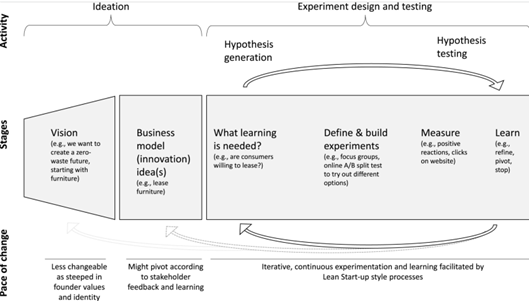
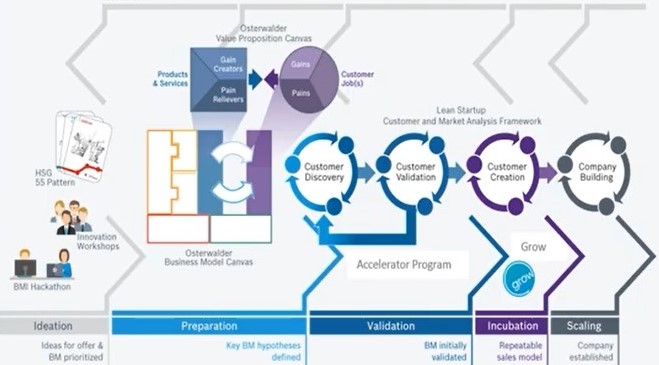
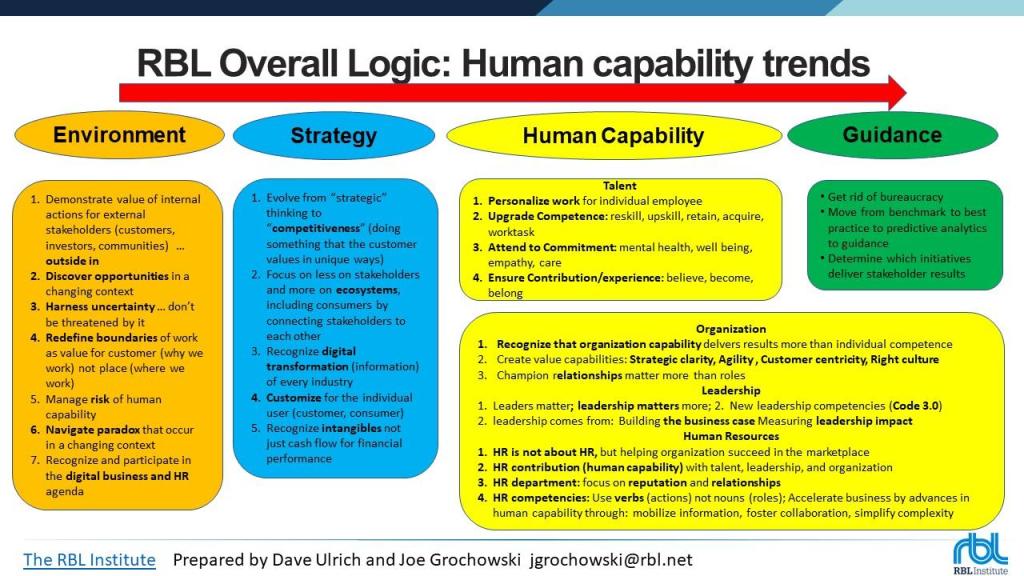
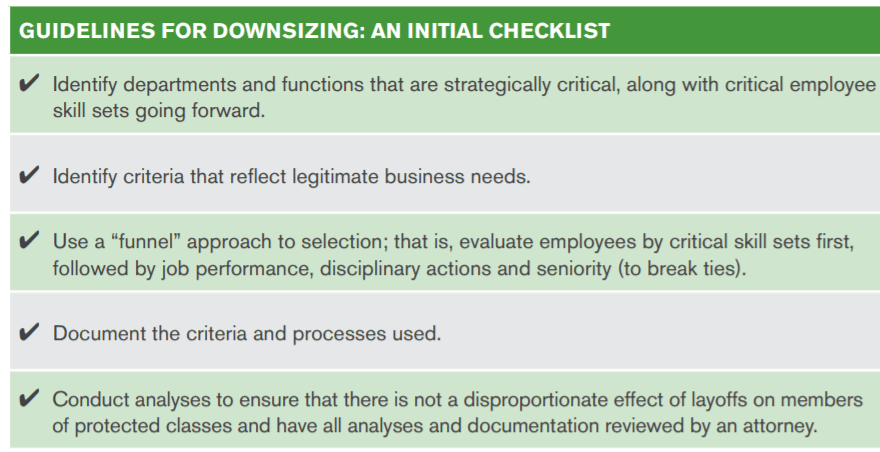

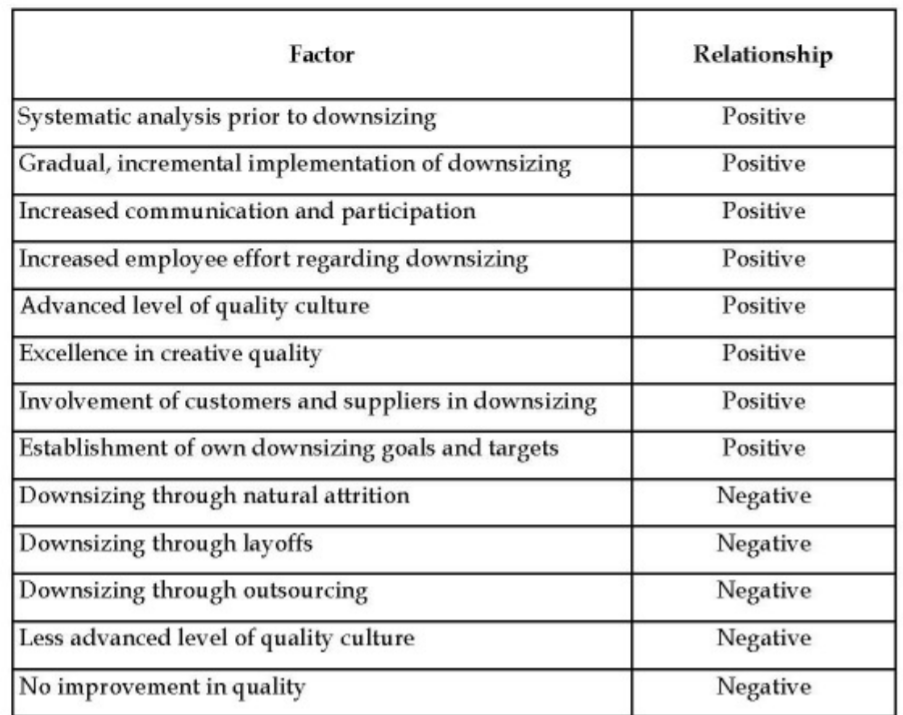
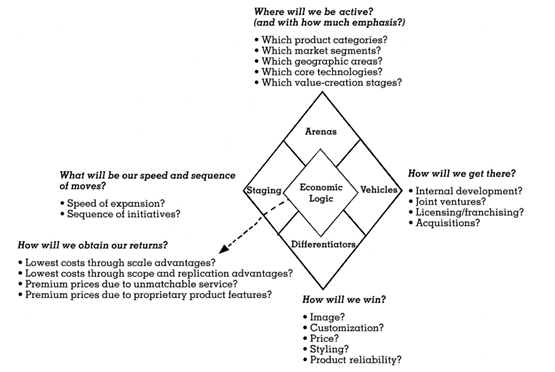
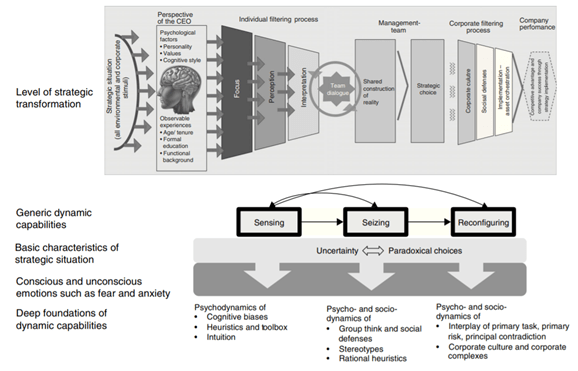

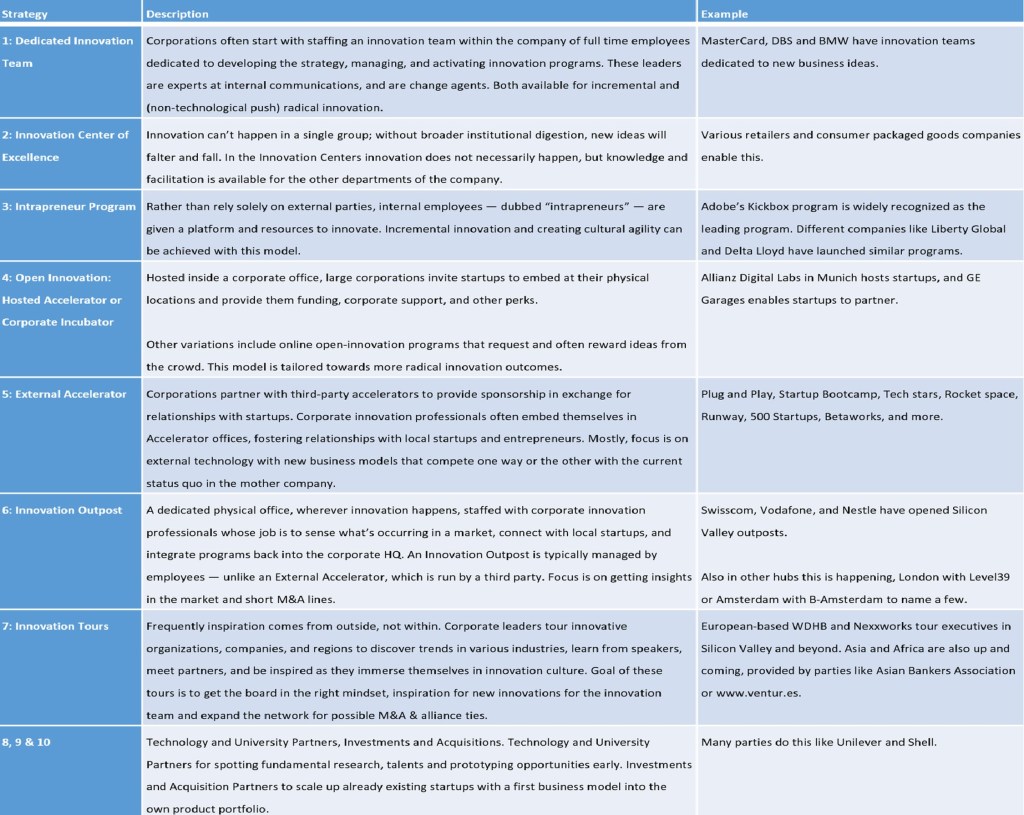

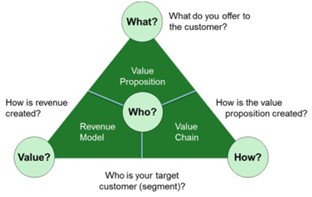

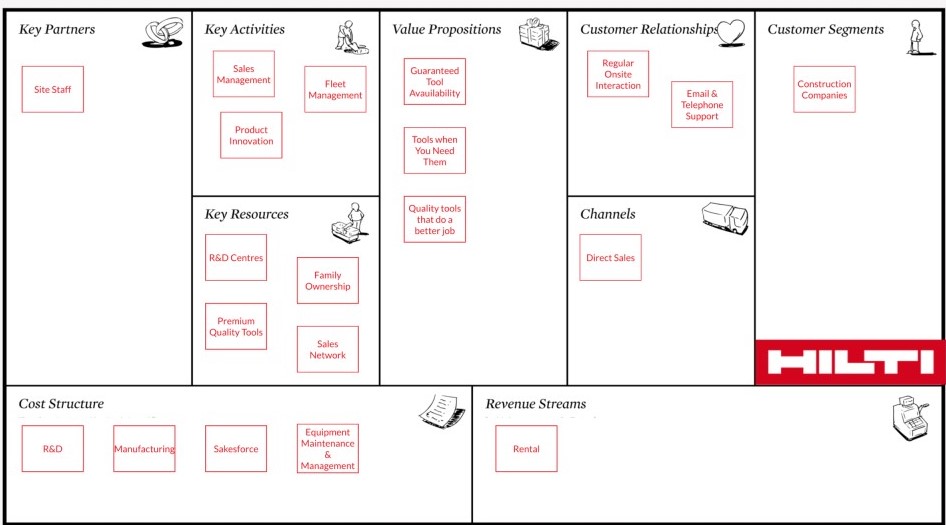

 Strategy & Competitiveness